Custom Sock Manufacturer — OEM, Wholesale & Private Label Socks Direct from Factory
We manufacture custom crew socks, custom athletic socks, custom logo socks, and
private label socks for brands, retailers, sports teams, and promotional agencies
worldwide — direct from our Zhuji, China sock factory. No middlemen. No markups.
🏭 Factory-Direct Price · From $0.9/pair
📦 Low MOQ · From 1 pair on most styles
🎨 Free Custom Design · Mockup in 24 hours
⚡ Fast Production · 8–20 day turnaround
🌍 Worldwide Shipping · DHL / FedEx / Sea Freight
✅ OEKO-TEX® Certified · Safe, tested materials
Easy, Reliable Custom Sock for Brand Owners, Companies, Organizations, or Personalized Products
1. Send Logo or Design Ideas
Feel free to send us your files or requests through our checkout form. Even if it's just a logo or brand name for logo socks, we can get started crafting your custom logo socks!
2. Approve Free Artwork Proofs
Our factory send digital artwork proof in 4-24 hours. You can even request to check the knitting preview to confirm how your custom socks will look when manufactured. All of these exciting sock design services are free, with unlimited revisions.
3. Get Customized Socks Fast
After approval, we'll begin production immediately. Your custom socks made to specification will typically be ready for shipping within a week - perfect for tight deadlines and promotional events!
Can make your socks in any types
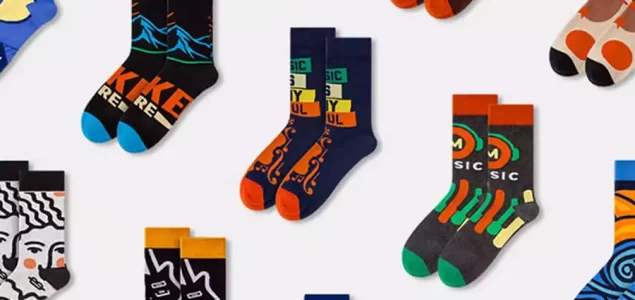
Custom Crew Socks
- Starting at $0.98/pair
Our crew socks are the most popular choice for custom sock orders. These versatile socks are crafted to sit comfortably at mid-calf height, delivering professional appearance and all-day comfort. Perfect for creating branded socks, custom logo socks, or everyday dress socks.
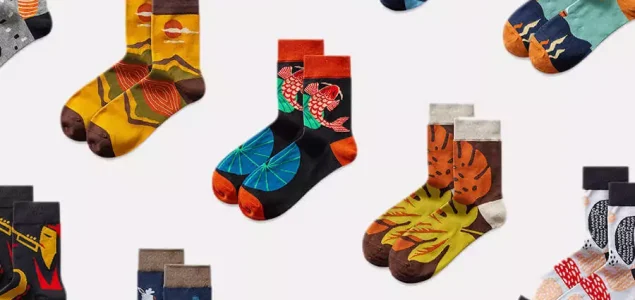
- Starting at $0.98/pair
Our custom logo socks are designed to showcase your brand with precision and quality. Every pair of socks is crafted using premium materials for comfort and durability. When you need to make an impression, custom socks with your logo deliver results that standard promotional items can’t match.
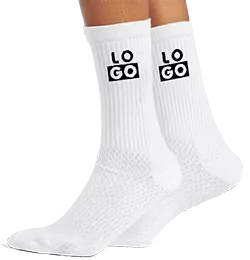
Custom crew socks
- Starting at $0.98/pair
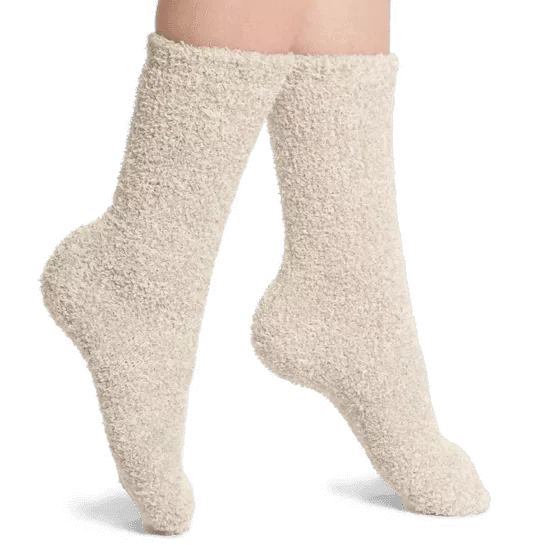
custom fuzzy socks
- Starting at $0.98/pair
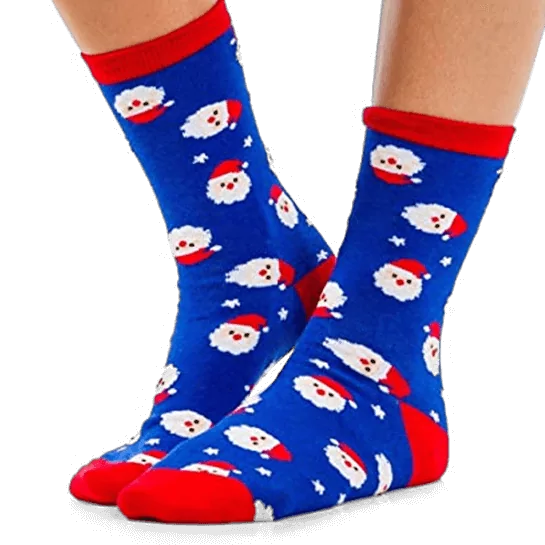
Custom Xmas socks
- Starting at $0.98/pair
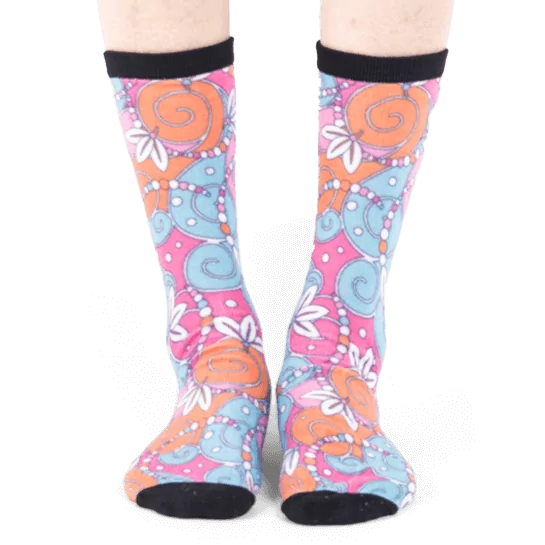
Custom print socks
- Starting at $0.98/pair
Ready to create your own stylish, comfortable socks?
Let’s make it happen together!
We are The Manufacturer
Design, knitting, packaging - We Handles Everything!
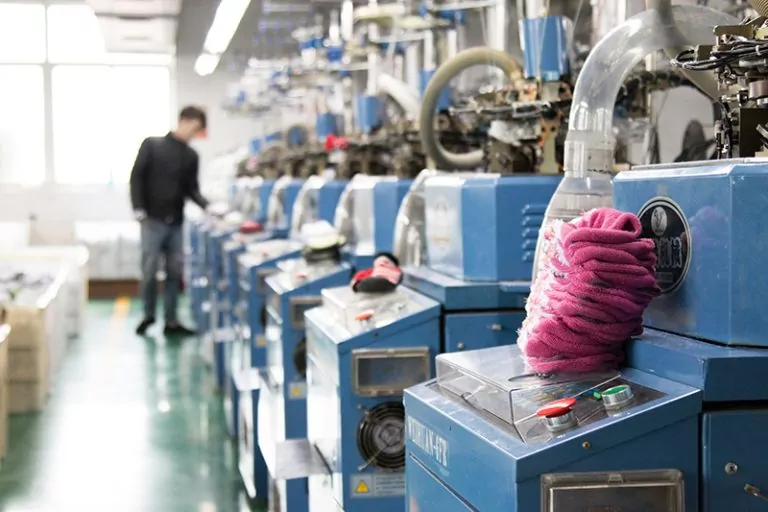
Always work directly with a sock manufacturer when ordering custom socks. We are a professional sock factory from China specializing in design and production of customized socks. All products are exported worldwide, with most customers in Europe, North America, and South America. We bring over 10 years of sock production & design experience.
Partnering with our sock factory gives you shorter turnaround time, comprehensive service, and most importantly, deep expertise in sock design and manufacturing. We provide one-stop service for custom socks – designing, sampling, bulk production and packaging – we can handle it all.
Get the best price working directly with us, lower than most competitors in the market, because we offer factory-direct pricing without middlemen.
Competitive Factory Price
With direct sock factory production pricing, you'll outperform competitors and maximize profits.
Save Your Time
Expect detailed and prompt responses, eliminating unnecessary waiting time
One-Stop Sock Customization
Beyond custom logo socks, we design socks and create packages, delivering personalized socks ready for retail.
All Sock Style Options
Customize material, length, size, and pattern. Options can be tailored to your budget requirements.
Fast Turnaround & On-Time Delivery
Bulk custom socks are manufactured quickly and delivered on schedule. Rush orders available at no extra cost.
Quality Inspection Guaranteed
Every pair of socks undergoes thorough inspection before packaging. 6-month return guarantee for defective products.
Start Custom Socks In These Ways!
Free Design Service
Let our professional team design the perfect custom socks for you! Our design team delivers production-ready sock design in as little as 10 hours, including expert advice on optimizations. Submit your ideas now for free designs!
White Label Socks
Choose from our extensive collection of pre-designed sock styles with coordinated packaging options. Simply select your favorite design and add your logo or custom pattern for instant brand recognition, we make the process effortless and stress-free!
Sock Design Templates
For designers, we offer a user-friendly sock mockup that displays multiple angles and connects with manufacturing processes. This free template streamlines your design workflow. Download now to create custom sock designs!
Available Customized Socks Options
Socks Size / Foot Size
We produce socks in all common sizes: XS, S, M, L, XL for both adults and children. See our complete list of customizable sock sizes.
Minimum Order Quantity
Match your color from over 100 color yarns, find the right color for your company brand’s style. View available colors.
Add Arch Support
Boost comfort with elastic arch support to improve blood flow, reduce swelling, and enhance performance socks for athletic activities.
Sock Length / Height
Choose from no-show socks, ankle socks, mid/half calf socks, crew socks, knee socks, over-the-knee socks, thigh socks, or custom heights.
Packaging and Labels
Customize sock labels, tags and packaging or use free private label options. Custom carton packaging and designs available.
Add Non-Slip Design
Incorporate non-slip rubber elements that provide grip and prevent falls. Custom non-slip designs available with logos or text.
Socks Color Options
Select from over 100 yarn colors to match your brand identity perfectly. Find the ideal shade for your company style. View our color options now.
Add Ribbed Support
Enhance your socks with ribbed support featuring raised vertical lines for added elasticity and preventing slippage.
Embroidery Design
Add embroidered designs, text and logos on both sides of your socks for unique personalization. Learn more about embroidered socks.
Why Working With Us is Easy?
No minimum quantity
Our best-selling custom sock option (which fits most people) can be customized starting with 1 pair! making custom-knit cotton socks easier. Customize to your heart’s content and enjoy speedy delivery, regardless of the number of orders.
Make artwork in 2-24 hours
We will send you digital artwork proof for design confirmation in as little as 2-24 hours. If you want we can also create a knit preview that shows you how your pattern will knit. All design services are free and unlimited revisions.
Best ex-factory price
We offer the most competitive price in the global market, you can get more profit! Make custom socks as low as $0.96/pair, and the price includes custom label packaging and primary packaging, transparent price no hiding!
Make finest quality socks
We always use the best quality materials to knit custom socks, you can get absolute quality sock products at OKSOX.
Free label available
Work with us and show “Made by your own Logo” on the label or packaging, we will add these labels and packaging for you for free!
Free rush production
Are you in a big hurry and need a fast delivery? Enjoy free expedited production on all orders! We can deliver as soon as 5-7 days after you confirm your order.
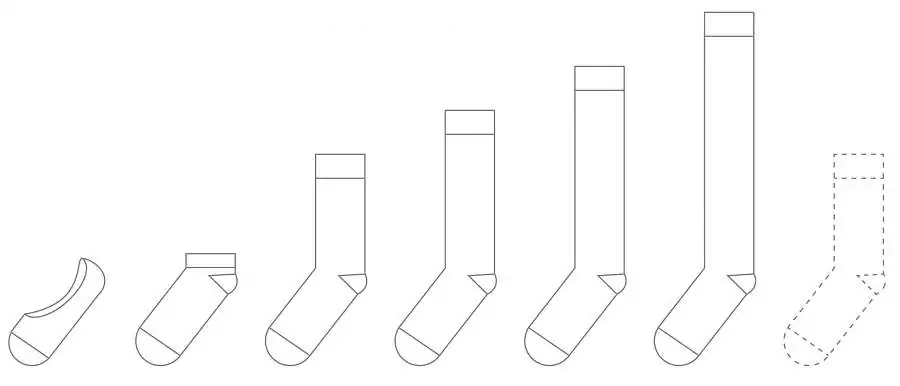
Any size for custom socks
Our advanced sock factory technology produces socks in multiple sizes from no-show to knee-high. We also offer specialty styles like cuffless, toeless, heelless, and toe socks with no restrictions on size or length.
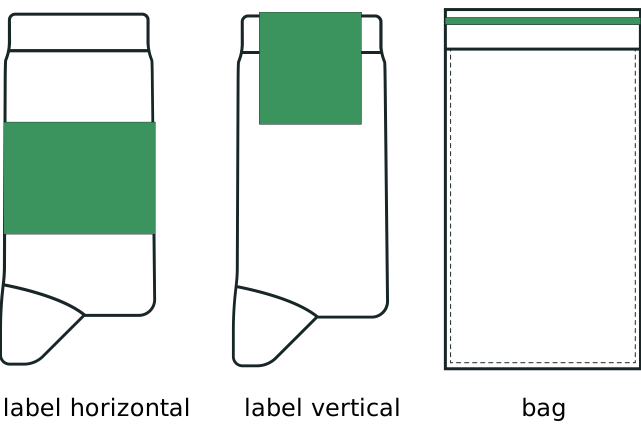
Custom Brand Packaging
Enhance your brand by featuring it on both the socks and packaging. More companies are ordering custom socks with packaging as gift socks for employees or customers. Unlike other promotional items that may be forgotten, everyone wears socks – making custom-designed socks and packages powerful brand reminders.
We offer bulk packaging materials: kraft paper, glossy paper, matte paper, and laminated paper. Choose from different packaging styles: top wrap, middle wrap, toe wrap, or full coverage packaging.
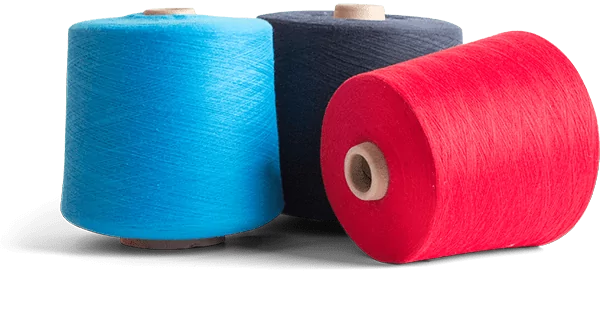
Socks Material
Our default material for custom socks is cotton, but we offer alternatives including wool, bamboo fiber, nylon, polyester, and more.
Choose the right material for your specific needs. For comfortable daily wear like dress socks, funky socks, or gift socks, combed cotton offers softness and breathability. For custom athletic socks or sports socks, polyester provides durability, strength and breathability.
Personalized Socks: The Perfect Custom Gift
Personalized socks make unique gifts for anyone and everyone. Perfect for any occasion: Christmas, Hanukkah, birthdays, weddings, baby showers, or simply as a stylish expression of personality. Whether creating 1 dad socks, custom dog socks, custom cat designs, or any other personalized custom concept, custom socks offer the perfect solution. With numerous customization options and designs to choose from, you’ll find the perfect pair of socks to match any personality. Order custom socks today!
Why Make Customize Brand Socks
Everyone Needs Socks
Everyone needs socks! They wear out fast and get replaced often, making them perfect for branding. Unlike most promotional items that collect dust, custom socks get used daily. Our factory makes comfortable, durable cotton socks with your logo at great wholesale prices. Increase your brand visibility while giving customers something they actually want. Ready to boost sales with custom socks? Contact us today for samples!
Customize Socks Is Easy
Our factory offers complete one-stop service for custom sock production! Unlike fragile promotional items or complicated clothing that requires multiple sizes, socks are simple, durable, and ship without damage. We handle everything from design to delivery, making the ordering process hassle-free. Why struggle with complex promotional items when custom socks offer better value and practicality? Contact us today for wholesale pricing and see why global brands choose our socks!
Step Into Brand Visibility
Get your logo on socks and watch your brand walk everywhere! For the price of just one sock pair, your logo gets seen dozens of times as people wear them out and about. Unlike expensive ads that people ignore, custom socks are useful gifts customers actually appreciate. They'll think of your company every time they put them on! Our factory makes high-quality logo socks at wholesale prices. Want an affordable marketing tool that really works? Order custom socks today!
Frequently Asked Questions
What is the MOQ for custom socks?
Most of our custom sock styles have Low minimum order requirement.
- You can start with just 1 pair for popular styles like custom crew socks, custom logo socks, and custom face socks
- This makes it easy to test our quality custom socks before placing larger orders
- Specialized styles (non-slip rubber socks, elite athletic socks, fuzzy socks, five-finger socks) require 500-1000 pairs
- We offer bulk discounts for larger orders, making our custom socks even more affordable for wholesalers
What sizes are available for custom socks?
Cloud Socks manufacturer can knit socks in all standard foot sizes from children to adults.
- We offer XS, S, M, L, XL, and “ONE SIZE” options that fit most adult unisex feet
- Our “ONE SIZE” option is particularly popular for logo socks, cotton socks, and branded socks
- We produce custom athletic socks in multiple sizes for proper fit for sports socks and performance socks
- Our sock factory can accommodate all size requirements with excellent comfort and durability
Do you provide samples before bulk production?
Yes! We strongly recommend ordering samples before proceeding with larger orders.
- Pre-production samples verify quality, fit, design accuracy, and colors of your custom socks
- Sample costs typically range from $20-50 depending on complexity and are refundable on bulk orders
- Sample production takes 3-5 days, with express shipping options available worldwide
- This is especially important for custom athletic socks and performance socks where fit and functionality are critical
Do you offer eco-friendly options for custom socks?
Yes! We’re committed to environmental standards for sustainable custom socks.
- Eco-friendly materials include organic cotton, recycled polyester, and bamboo fibers
- Our sock manufacturing processes focus on reducing waste and conserving resources
- We’ve implemented water recycling systems and energy-efficient machinery in our sock factory
- Our OEKO-TEX certification ensures products are free from harmful chemicals
- Special eco-friendly packaging options are available for environmentally conscious brands
Can I create custom socks with special features?
Absolutely! We offer numerous special features to enhance your custom socks.
- Extra cushioning for custom athletic socks and custom running socks
- Arch support for performance socks and specialized features for sports socks
- Moisture-wicking properties for active wear and reinforced heels/toes for dress socks
- Special designs like custom dog socks or socks for your sports team with logo
- Fun options to put your face on socks or create professional branded socks with technical features
Are your socks made in USA or abroad?
Our primary sock factory is located in China, providing competitive pricing with superior quality.
- All socks are designed and manufactured under strict quality control with OEKO-TEX certification
- Our factory employs skilled craftspeople with decades of experience in sock production
- Cost advantages allow us to offer premium quality custom socks at prices lower than USA sock manufacturers
- We maintain rigorous high standards throughout our manufacturing process for every pair of socks
What are your lead times and turnaround time?
Our standard production period for custom socks is 15-25 days after design approval.
- We pride ourselves on quick turnaround times with the fastest production cycle in the industry
- For rush orders, we provide free expedited production with delivery in 8-12 days after confirmation
- We carefully manage our supply chain to meet tight deadlines without compromising quality
- Each order receives a production timeline with regular updates throughout the manufacturing process
What payment methods do you accept for custom socks?
We offer flexible payment options for all custom sock orders.
- We accept PayPal, major credit cards, wire transfers, and other international payment methods
- For bulk custom socks orders, we typically require a 30% deposit with the balance due before shipping
- Returning customers receive favorable payment terms
- All transactions are secure with detailed invoices and transparent pricing
- Complete checkout is available through our secure online portal for smaller orders
Still Have Questions?
Didn’t find an answer here? Check out our FAQ page to check more, or contact us.
Buyer’s Guide About Custom Socks Wholesale
Wholesale Custom Socks Buyer's Guide for B2B Importers
Wholesale Custom Socks Buyer's Guide for B2B Importers
The Complete 2026 Guide to Sourcing Custom Logo Socks, Private Label Socks and OEM Socks from a China Sock Manufacturer
By the CustomSockManufacturer.com sourcing and production team · Zhuji, Zhejiang, China · Last updated September 28, 2026
Sourcing wholesale custom socks from China can give you factory-direct pricing, low minimums and fast turnaround — but only if you get the details right: yarn and blend, needle count, sock height, toe closure, logo method, sizing, MOQ, packaging, compliance, duties and quality control. This guide answers the questions B2B importers ask most, distilled from more than 10 years of sock production and design at CustomSockManufacturer.com, a custom sock manufacturer in Zhuji, Zhejiang — the world's sock capital. We make custom logo socks, custom crew socks, custom dress socks, custom compression socks, custom basketball socks and custom printed socks for brands, retailers, teams and promotional buyers across Europe, North America and South America.
Whether you are a promotional products distributor fulfilling a corporate order, a DTC or Amazon seller launching a private label sock brand, a sports club ordering team socks, a race organizer planning finisher gifts, a retailer sourcing seasonal Christmas socks, or a hospital or trampoline park buying grip socks in bulk, this guide explains what you need to plan, specify, source and import custom socks with confidence.
📌 Key Takeaways: Custom Sock Sourcing in 60 Seconds
- MOQ: the industry norm is 300–1,000 pairs per design; at our factory, best-selling knitted styles start from 1 pair, specialty styles (grip, fuzzy, toe, elite athletic) from 500–1,000 pairs and compression socks from 500–2,000 pairs.
- Price: most custom logo socks cost US$0.90–7.50 per pair FOB China; sublimation printed socks start from $2.90 per pair.
- Timeline: artwork proof in 2–24 hours, samples in 2–7 days, bulk production in 10–15 working days; about 4–8 weeks door-to-door by air or express and 8–13 weeks by sea for a first order.
- Construction: 144N suits most logo and athletic socks, 168N gives finer detail, and 200N is for dress socks and high-definition logos.
- Material: combed cotton with nylon or polyester and 2–5% spandex for everyday and promotional socks; performance polyester for sport; merino wool for hiking; high-spandex nylon for compression; polyester-rich blends for sublimation.
- Logo method: knitted jacquard is the most durable (about 5–8 yarn colors); sublimation offers unlimited colors on polyester; embroidery and silicone grip add premium or functional branding.
- Compliance: fiber content and origin on the package (US rules allow a package label for hosiery), CPSIA for kids' socks, Prop 65 (including BPA), PFAS bans in California and New York, EU PFHxA limits from 10 October 2026, and cotton traceability under the UFLPA.
- US duties (September 2026): China-made cotton socks pay 13.5% MFN + 7.5% Section 301 + 12.5% Section 301 forced-labor duty ≈ 33.5% before fees; EU duty is typically 12% plus VAT.
- Always: approve a physical pre-production sample and inspect before shipment at AQL 2.5 (major) / 4.0 (minor).
🧭 How This Guide Is Organized
The 19 chapters follow the order of a real sourcing project, from planning your socks to shipping and reordering. Start with the part that matches where you are:
In a hurry? Read the key takeaways above, check the buyer FAQ or go straight to request a free quote.
📑 Table of Contents
Click any section to jump directly to that part of the guide.
Part 1 · Plan Your Custom Socks
1. The Custom Sock Market & Sourcing Models- 1.1 Global Socks Market Snapshot
- 1.2 Zhuji & Datang: The Sock Capital
- 1.3 OEM, ODM, Private & White Label
- 2.1 Sock Heights Explained
- 2.2 Sock Types by End Use
- 2.3 Logo Visibility by Height
- ▸ Quick Decision Framework
- 3.1 Cotton
- 3.2 Polyester & Performance Fibers
- 3.3 Nylon (Polyamide)
- 3.4 Spandex, Elastane & LYCRA®
- 3.5 Merino Wool
- 3.6 Bamboo Viscose
- 3.7 Specialty Fibers
- 3.8 Typical Blend Recipes
- ▸ Quick Decision Framework
- 4.1 Needle Count Explained
- 4.2 Knit Structures & Cushioning
- 4.3 Toe Closure Options
- 4.4 Heel & Cuff Construction
- 4.5 Functional Features
- 4.6 Judge Sock Quality in 5 Minutes
- 5.1 Standard Size Chart
- 5.2 One Size vs Multi-Size
- 5.3 Kids' & Baby Socks
- 5.4 Measurement Points & Tolerances
- 6.1 Knitted Jacquard
- 6.2 Sublimation Printing
- 6.3 360° Digital Printing
- 6.4 Embroidery
- 6.5 Silicone & PVC Grip Printing
- 6.6 Labels, Transfers & Specialty Effects
- 6.7 Method Comparison Table
- 6.8 Artwork, Colors & Placement
- ▸ Quick Decision Framework
Part 2 · Budget, Timeline & Compliance
7. MOQ, Pricing & Lead Times- 7.1 Why Socks Have MOQs
- 7.2 Our MOQ Matrix
- 7.3 What Drives the Price
- 7.4 Custom Sock Price Ranges
- 7.5 Costs Not in FOB Prices
- 7.6 Lead Times
- 7.7 Realistic Project Timeline
- 7.8 Seasonal Planning Calendar
- 8.1 Compliance Map by Market
- 8.2 Voluntary Certifications
- 8.3 United States
- 8.4 European Union & UK
- 8.5 Canada & Australia
- 8.6 Documents to Request
- 9.1 Corporate Gifts & Promotional
- 9.2 Sports Teams & Clubs
- 9.3 Running Events & Marathons
- 9.4 Athletic & Performance Brands
- 9.5 Fashion & DTC Brands
- 9.6 Amazon FBA & E-commerce
- 9.7 Retail Chains
- 9.8 Hospitals & Senior Care
- 9.9 Trampoline Parks & Play Centers
- 9.10 Yoga, Pilates & Barre Studios
- 9.11 Outdoor, Hiking & Ski
- 9.12 Holiday & Seasonal
- 9.13 Uniforms & Workwear
Part 3 · Order & Produce
10. Packaging & Branding- 10.1 Retail Packaging Options
- 10.2 What to Print on Packaging
- 10.3 Amazon FBA Packaging
- 10.4 Master Cartons & Shipping Marks
- 10.5 Eco-Friendly Packaging
- 10.6 Packaging by Buyer Type
- 12.1 Step 1: Verify the Company
- 12.2 Step 2: Factory or Trading Company?
- 12.3 Step 3: Ask Technical Questions
- 12.4 Step 4: Verify Certificates
- 12.5 Step 5: Watch for Red Flags
- 12.6 Step 6: Start Small, Then Scale
- 13.1 Sample Types
- 13.2 What to Test on Samples
- 13.3 Approval & Golden Sample
- 13.4 Sample Shipping & Duties
- 14.1 Inspection Stages
- 14.2 AQL Sampling Table
- 14.3 Sock Defect Classification
- 14.4 On-Site Checks
- 14.5 Lab Testing Standards
- 14.6 Our In-House QC
Part 4 · Ship, Pay & Grow
15. Shipping, Duties & Landed Cost- 15.1 Shipping Methods Compared
- 15.2 Carton & Container Planning
- 15.3 Incoterms Explained
- 15.4 US Duties on Socks (2026)
- 15.5 EU, UK & Other Markets
- 15.6 Landed Cost Examples
- 15.7 Amazon FBA & Cargo Insurance
- 18.1 Choosing on Price Alone
- 18.2 Vague Specifications
- 18.3 Approving Mockups Only
- 18.4 Designing Like a T-Shirt Print
- 18.5 Wrong Size Strategy
- 18.6 Mislabeled Fibers & Claims
- 18.7 Ignoring Chemical Rules
- 18.8 Late Packaging & Barcodes
- 18.9 Underestimating Landed Cost
- 18.10 Bad Timing
- 18.11 Skipping Inspection
- 18.12 Unverified Bank Accounts
Answers, Terms & Quote
❓ Buyer FAQ: 32 Questions Answered- A. Getting Started & Ordering
- B. Pricing & Payment
- C. Design, Samples & Quality
- D. Production & Delivery
- E. Shipping, Duties & Customs
- F. Labels, Compliance & Certificates
- G. About Our Factory
Plan Your Custom Socks
Understand where custom socks are made and how buying models differ, then choose the style, material, construction, sizing and logo method that fit your customers and your budget.
1. The Custom Sock Market and Sourcing Models Explained
China is the world's largest sock producer, and the Zhuji–Datang cluster in Zhejiang Province alone makes an estimated 27 billion pairs a year. For a B2B buyer, the real decision is not "China or not" but which sourcing model — factory-direct OEM, ODM, private label or white label, a trading company, or print-on-demand — fits your volume, budget, lead time and need for control.
Before you compare quotes, it helps to understand where custom socks are made and which buying route you are actually using. The same logo sock can be bought factory-direct, through a trading company, as a white label product or through a print-on-demand service — and each route changes your price, your minimum order, your lead time and how much control you have over quality. This chapter gives you that big picture in three steps: the size of the market, why most socks come from one region of China, and how the different sourcing models work.
1.1 Global Socks Market Snapshot
According to Global Market Insights, the global socks market was worth about US$24.7 billion in 2025 and is projected to reach US$49.4 billion by 2035, a compound annual growth rate of 7.3% over 2026–2035. Casual socks are the largest segment (about 46% of 2025 revenue), and Asia Pacific is both the largest region (about 34%) and the fastest-growing one.
For buyers, a growing market has two consequences: there are more opportunities to sell socks, and there is more competition on the shelf. Winning brands differentiate with design, comfort features, sustainability stories and packaging — which is exactly what custom manufacturing lets you control. The main demand drivers are:
- Athleisure and performance. Consumers expect sport-specific features such as cushioning zones, arch support and moisture management in running, basketball, soccer, tennis, padel, cycling and gym socks.
- Self-expression. Patterned, novelty and "fun" socks turn a basic product into a gift and support higher retail prices.
- Branded merchandise. Custom logo socks are one of the most practical promotional products: one or two sizes fit almost everyone, they ship flat and people actually wear them.
- Sustainability. Organic cotton, recycled polyester, merino wool and plastic-free packaging help brands meet retailer and consumer expectations.
- Function-specific niches. Grip socks for hospitals, trampoline parks and Pilates studios, and compression socks for runners, travelers and people who stand all day, are fast-growing B2B categories.
1.2 Zhuji and Datang: Why the World's "Sock Capital" Matters to Buyers
Datang, a subdistrict of Zhuji City in Zhejiang Province, is widely known as the sock capital of the world. China Daily reported that Datang produces around 27 billion pairs of socks worth ¥75 billion (about US$11.14 billion) every year — roughly 70% of China's market and 35% of global output — from more than 6,000 enterprises.
Why should a buyer care where the factory is? Because a sock is made from many inputs — dyed yarns, covered spandex, knitting programs, linking, boarding, printed packaging — and in a dense cluster all of them are available within a short drive. In practical terms, that gives you:
- Speed. Yarn, machine technicians, finishing services and packaging printers are close by, so samples can be knitted in days rather than weeks.
- Low minimums. Deep stocks of dyed yarn in hundreds of shades make small custom runs economical, because the factory does not have to dye a special yarn lot for every order.
- Competitive pricing. Specialized sub-suppliers and high machine density keep factory-direct prices low.
- Easy export logistics. Ningbo Port, one of the world's busiest container ports, is a short trucking distance away.
Our factory, CustomSockManufacturer.com, is located in Zhuji and ships export orders through Ningbo Port. Design, machine coding, knitting, toe closing, boarding, pairing and packaging are handled under one roof, which is why we can offer free design, fast samples and small custom runs.
1.3 OEM, ODM, Private Label, White Label, Trading Company or Print-on-Demand?
These terms are often used loosely online, which causes misunderstandings in quotations. Here is what each one means in custom sock manufacturing:
- OEM socks (Original Equipment Manufacturing) — you supply the design and the specifications (your tech pack), and the factory knits exactly to your specs under your brand. You have full control, but you also carry the responsibility for getting the specification right.
- ODM socks (Original Design Manufacturing) — the factory's designers develop the design, construction and packaging for you; you approve it and sell it under your brand. Ideal if you want a unique product but have no in-house sock design expertise.
- Private label socks — any socks made by a manufacturer and sold under your brand name. A private label program can be OEM or ODM; the term describes the branding, not who designed the sock.
- White label socks — proven factory designs and constructions that you customize with your logo, colors and packaging. Because the construction is already tested, this is the fastest and lowest-risk route to market.
| Sourcing model | Best for | Typical order size | Unit cost | Control over specs | Watch out for |
|---|---|---|---|---|---|
| Factory-direct OEM / ODM | Sock brands, distributors, teams, retailers | Industry norm 300–1,000+ pairs per design | Lowest | Full | You need clear specs; verify it is a real factory |
| White label / private label on existing designs | Startups, promotional buyers, events, Amazon tests | From very small quantities | Low | Logo, colors and packaging | Less product differentiation |
| Trading company / sourcing agent | Buyers who need many product categories consolidated | Varies | Medium (adds a margin) | Indirect | Less transparency about who actually knits your socks |
| Print-on-demand (POD) | Testing designs, one-off gifts | 1–50 pairs | Highest | Low (printed blanks only) | Printed rather than knitted; limited materials and constructions |
| Stock wholesale socks | Basic replenishment | Carton quantities | Low | None | Not custom — no logo or brand story |
Which model should you choose?
- Choose white label if you need socks within weeks, have a limited budget or are testing a new market.
- Choose OEM if you have a design team, strict specifications or retailer requirements to meet.
- Choose ODM if you want a unique product but lack in-house sock design experience.
- Use a trading company only if you need one partner to consolidate many unrelated product categories.
- Use print-on-demand to test designs with zero inventory, accepting a much higher unit cost.
✅ Buyer checklist — Chapter 1
- Decide which sourcing model matches your volume, budget and timeline.
- Confirm whether each supplier is a knitting factory or a trader (see Chapter 12.2).
- Plan a small test order before committing to large volumes.
2. Sock Styles and Heights: Choosing the Right Custom Sock Type
Sock height drives yarn consumption (and therefore price), logo area, packaging size and end use. Crew socks are the most popular choice for custom logo socks; no-show, low-cut and ankle socks dominate running and warm-weather retail; knee-high and over-the-calf socks serve team sports, school uniforms and compression.
The first decision in any sock project is the style — above all the height. Height is not just a fashion choice. A taller sock uses more yarn and more knitting time, so it costs more; it also gives you more space for a logo, needs larger packaging, and must suit the shoes your customers wear. Choosing the right height for the end use is the easiest way to avoid returns and wasted budget.
2.1 Sock Heights Explained
The table below lists the standard heights from shortest to tallest. "Leg length" is measured from the top of the heel to the top of the cuff.
| Height | Where it ends | Approx. leg length* | Best for | Logo space |
|---|---|---|---|---|
| No-show / liner | Below the shoe line | Foot only | Loafers, sneakers, summer retail | Sole, heel tab, packaging |
| Low-cut | Just above the shoe collar | about 2–5 cm | Running, gym, casual | Very small (tab or heel) |
| Ankle / quarter | Covers the ankle bone | about 5–10 cm | Running, tennis, padel, everyday athletic | Small side or front logo |
| Micro-crew / mini-crew | Above the ankle, below mid-shin | about 10–14 cm | Running, trail, hiking, lifestyle | Moderate |
| Crew | Mid-shin | about 15–20 cm | Logo socks, corporate gifts, basketball, lifestyle | Large — the most popular custom height |
| Mid-calf | Lower to middle calf | about 20–28 cm | Dress and business socks, winter socks | Large |
| Over-the-calf / knee-high | Just below the knee | about 35–45 cm | Soccer, baseball, compression, school uniforms, ski | Very large |
| Over-the-knee / thigh-high | Above the knee | about 55–75 cm | Fashion, costume, winter | Very large |
*Approximate values for adult size M/L. Always write exact measurements in your tech pack. We knit every height from no-show to thigh-high, plus special constructions such as cuffless, toeless and heelless socks — see custom socks options and styles.
How to think about the three height groups:
- Low heights (no-show to ankle) are chosen for comfort and invisibility in low shoes. They use the least yarn, but the logo is barely visible, so packaging does most of the branding work. No-show socks need a silicone heel grip, and low-cut socks usually need a heel tab, or they slip into the shoe.
- Mid heights (micro-crew to mid-calf) are the sweet spot for custom programs: comfortable in most shoes, visible when worn with shorts or rolled trousers, and wide enough for a clear knitted logo. Crew socks alone cover most promotional, corporate and lifestyle orders.
- Tall heights (over-the-calf and above) are chosen for sports rules, uniforms, warmth or compression. They use the most yarn and need a stronger cuff so they stay up, but they offer the largest canvas for team colors and patterns.
2.2 Sock Types by End Use
Beyond height, socks are designed around an end use. Each type below has its own construction priorities:
- Custom crew socks — the workhorse of custom sock programs. They are comfortable, versatile and offer the most leg area for a knitted logo, which makes them the default for branded socks, corporate gifts and retail basics.
- Custom dress socks — thin, fine-gauge (typically 200-needle) mid-calf or over-the-calf socks in combed or mercerized cotton. They are designed to look smooth under business trousers and are popular for weddings and premium gift boxes.
- Custom basketball socks — crew or quarter height with full cushioning to absorb jumping impact, an arch compression band for support, and ventilation mesh; team colors and numbers are knitted in.
- Custom baseball stirrup socks — over-the-calf team socks with a stirrup cut-out, worn over a base sock, and made from durable materials for game days.
- Custom compression socks — knee-high, crew or low-cut styles with graduated pressure, arch support and breathable mesh for runners, travelers and people on their feet all day.
- Custom grip (non-slip) socks — silicone or rubber grip soles that prevent slipping on smooth floors, used by hospitals, senior care, trampoline parks, yoga, Pilates, barre and soccer players.
- Custom toe socks — five-toe socks that separate the toes to reduce friction between them, popular for yoga, Pilates, running and foot-health retail.
- Custom fuzzy socks — fluffy, warm lounge socks for home wear, winter gift sets and spa or hotel amenities.
- Custom Christmas socks — holiday patterns for retail, family gifts and corporate year-end gifting, usually sold in gift packaging.
- Custom printed socks — sublimation all-over prints with photographic detail and unlimited colors, ideal for faces, pets and event artwork.
- Kids' and baby socks — smaller sizes, softer yarns and often grip dots for toddlers. They are subject to children's product rules (see CPSIA).
- Outdoor, hiking, ski and work socks — heavier gauges, wool blends, targeted cushioning and reinforced heels and toes for long days in boots.
For a deeper look at every category, read our complete guide to 29 sock types or browse all custom sock products.
2.3 Logo Visibility by Sock Height
Where your logo can appear depends directly on the height you choose — an important point for promotional buyers who pay for visibility:
- Crew and taller: logos can go on both outer sides of the leg, on the front of the leg, or be tiled over the whole sock. This gives maximum brand visibility when the socks are worn with shorts, skirts or rolled trousers.
- Ankle and quarter: there is room for a small logo on the side or back of the cuff, or for a knitted pattern on the top of the foot.
- No-show and low-cut: the sock is hidden inside the shoe, so branding moves to the sole or footbed, a heel tab and, above all, the packaging.
Quick Decision Framework: Sock Style
| Your goal | Recommended style |
|---|---|
| Corporate gift or trade-show giveaway | One-size crew, knitted logo, branded paper band |
| Basketball team uniform | Crew or quarter, full cushion, arch band, team colors |
| Soccer or football club | Knee-high rib team socks plus grip socks |
| Running event merchandise | Quarter or micro-crew, technical blend, light cushion |
| Summer retail line | No-show with silicone heel grip, plus low-cut |
| Business or dress collection | Mid-calf 200-needle dress socks in combed or mercerized cotton |
| Winter gift sets | Fuzzy socks or wool-blend crew socks in a gift box |
| Hospital, senior care or trampoline safety | Crew or ankle grip socks with a silicone sole |
✅ Buyer checklist — Chapter 2
- Choose the height based on the shoes your customers wear and where the logo must be seen.
- Write the exact leg length for each size in your tech pack.
- For no-show and low-cut socks, add a silicone heel grip or heel tab.
3. How to Choose the Right Sock Material
For most custom socks, combed cotton blended with nylon or polyester and 2–5% spandex (elastane) gives the best balance of comfort, durability and cost. Choose polyester or branded performance fibers for athletic moisture management, merino wool for hiking and cold weather, high-nylon and spandex blends for compression, and polyester-rich blends for sublimation printing.
Material is the single biggest driver of how a sock feels, performs, lasts — and costs. Almost every sock is a blend, because each fiber does a different job: a comfort fiber (cotton, wool or viscose) touches the skin, a strength fiber (nylon or polyester) resists abrasion, and an elastic fiber (spandex) keeps the sock in shape. Reading a composition such as "80% cotton / 17% polyester / 3% spandex" therefore tells you three things: the sock feels mainly like cotton, polyester adds durability and faster drying, and spandex keeps the cuff up.
Our standard material for custom socks is cotton, and we also knit with nylon, polyester, bamboo, wool, acrylic, cashmere, angora, spandex (elastane/LYCRA®) and performance yarns such as COOLMAX® and DRYMAX®, plus eco options like organic cotton and recycled polyester. Browse available shades on our sock yarn color list.
3.1 Cotton: The Default for Everyday and Logo Socks
Cotton is soft, breathable and familiar to consumers, and it shows knitted jacquard colors beautifully. On its own, however, it has poor stretch recovery and dries slowly, so custom cotton socks almost always include nylon or polyester for strength and spandex for shape retention. Cotton quality varies a lot, and the grade you choose has a visible effect on softness, pilling and durability:
| Cotton grade | What it is | Best for |
|---|---|---|
| Carded cotton | Standard cotton yarn with more short fibers; slightly hairier and more prone to pilling | Budget basics and very price-driven promotions |
| Combed cotton | Short fibers and impurities combed out for a smoother, stronger, softer yarn | The standard for quality custom logo socks and retail crew socks |
| Mercerized cotton | Combed cotton treated with caustic soda under tension for sheen, strength and richer color | Dress socks and premium business or gift socks |
| Long-staple cotton (e.g. Pima, Supima®, Egyptian) | Extra-long fibers for exceptional softness and durability | Luxury dress socks and premium brands |
| Organic cotton | Grown without synthetic pesticides or fertilizers; claims need GOTS or OCS certification | Eco brands, baby and kids' socks |
| Recycled cotton | Cotton recovered from pre- or post-consumer waste, usually blended with virgin fiber | Circular and sustainability-led collections |
- Best for: everyday crew socks, custom logo and brand socks, dress socks, kids' socks and Christmas socks.
- Strengths: soft, breathable and comfortable next to the skin; takes knitted jacquard colors well; accepted in every market.
- Weaknesses: holds moisture during intense sport, dries slowly and has lower abrasion resistance than nylon.
- Typical blend: 75–85% cotton with 12–20% nylon or polyester and 2–5% spandex.
- Sourcing tip: write "combed cotton" in your tech pack. Unspecified "cotton" often means carded yarn, which pills and fades sooner.
3.2 Polyester and Performance Fibers
Polyester is hydrophobic: it absorbs very little water, so it helps move sweat away from the skin and dries quickly. Performance fibers such as COOLMAX® use engineered fiber cross-sections to speed up moisture transport even further. Recycled polyester, made largely from PET bottles, offers similar performance with a sustainability story that can be backed by GRS or RCS certification.
- Best for: running, gym, basketball, soccer, cycling and hiking socks, and sublimation printed socks — sublimation only bonds with polyester, not cotton.
- Strengths: quick-drying, durable, colorfast, lightweight and cost-effective.
- Weaknesses: can retain odor and feels less "natural" than cotton for casual wear.
- Typical blend: polyester-rich blends with cotton or nylon and 3–5% spandex.
- Sourcing tip: if you market a branded fiber such as COOLMAX®, make sure the branded yarn is actually used and documented.
3.3 Nylon (Polyamide): The Durability Fiber
Nylon is strong, smooth and highly resistant to abrasion. It is used as the main body yarn in dress, running and compression socks, and as a reinforcement yarn in heels and toes — the places where socks wear out first. In the EU and UK it must be labeled "polyamide".
- Best for: dress socks, compression socks, running socks, thin liners and reinforced heels and toes.
- Strengths: excellent abrasion resistance, smooth hand feel, keeps socks thin and strong.
- Weaknesses: less absorbent than cotton and feels synthetic if used alone.
- Sourcing tip: ask for a "nylon-reinforced heel and toe" on cotton-rich socks — it noticeably extends wear life for a small cost increase.
3.4 Spandex, Elastane and LYCRA®
Spandex provides stretch and recovery: it lets the sock expand over the foot and then pulls it back into shape, which keeps the cuff up and the foot snug. In socks it is usually "covered" — wrapped with nylon or polyester — so it lasts longer. Most casual and athletic socks contain about 2–5% spandex, while compression socks use considerably more to create a measurable pressure.
- Why it matters: too little or poorly covered spandex is the main reason socks sag, slide down or lose shape after a few washes.
- Labeling: the generic name is "spandex" in the United States and "elastane" in the EU and UK. LYCRA® is a brand of spandex and should only be named if the branded fiber is actually used.
3.5 Merino Wool and Wool Blends
Merino wool is a fine, soft wool that regulates temperature, resists odor naturally, cushions well and stays warm when damp. Pure wool wears quickly, so performance merino socks are blended with nylon for durability and a little spandex for fit.
- Best for: hiking, trekking, ski and snowboard socks, work boot socks and premium winter or travel socks.
- Strengths: thermoregulation, odor resistance, premium perception and all-day comfort.
- Weaknesses: much higher yarn cost than cotton; needs gentle washing and can shrink or felt if mistreated.
- Typical blend: 60–80% merino wool with nylon and 2–5% elastane.
- Sourcing tip: European and outdoor brands increasingly ask for mulesing-free wool with RWS (Responsible Wool Standard) certification — confirm yarn availability before you design.
3.6 Bamboo Viscose and Other Cellulosics
So-called "bamboo socks" are made from viscose (also called rayon) regenerated from bamboo pulp. They are silky, soft and absorbent, and very popular in DTC and gift markets. The way you describe them on the label and in marketing, however, is strictly regulated.
- Best for: soft everyday socks, DTC gift socks and comfort-focused lines.
- Strengths: silky hand feel, good absorbency, attractive drape and color.
- Weaknesses: lower abrasion resistance than cotton-nylon blends, so it is usually blended with nylon.
- Typical blend: about 75% viscose from bamboo, 22% nylon and 3% elastane.
Alternatives in the same family include modal and lyocell (TENCEL™ is a brand), which offer similar softness with different environmental profiles.
3.7 Specialty Fibers
- Acrylic — warm, bulky and affordable, used in winter and slipper socks; it pills more than wool, so it suits casual rather than performance products.
- Feather and chenille yarns (usually polyester) — give fuzzy socks their plush, fluffy handle.
- Cashmere and angora blends — very soft, warm luxury fibers for premium winter and gift collections.
- Silver or copper ion yarns — used for odor control; marketing claims about them are regulated (see antimicrobial claims).
- Metallic (lurex), reflective and other specialty yarns — accents for fashion, holiday and safety designs.
3.8 Typical Sock Blend Recipes
The compositions below are common starting points. Your final blend depends on the needle count, the cushioning and your target price, so treat them as a basis for discussion with your supplier rather than fixed rules.
| Sock type | Example composition | Why it works |
|---|---|---|
| Everyday logo crew socks | 80% cotton / 17% polyester / 3% spandex | Soft, durable, cost-effective and holds knitted logo colors well |
| Premium combed cotton crew | 85% combed cotton / 12% nylon / 3% elastane | Smoother hand feel and a stronger heel and toe |
| Dress socks | 75% mercerized cotton / 22% nylon / 3% elastane | Fine sheen, thin profile and good shape retention |
| Athletic cushion crew | 65% polyester / 30% cotton / 5% spandex | Moisture management with a soft feel |
| Technical running socks | Polyester- or nylon-rich blend with 3–5% spandex | Lightweight, fast-drying and snug |
| Hiking socks | 60–80% merino wool / nylon / 2–5% elastane | Warmth, odor resistance and abrasion strength |
| Compression socks | Nylon-rich blend with a high spandex share (often 15% or more) | Controlled, measurable pressure and recovery |
| Sublimation printed socks | Polyester-rich blend (typically 90% or more) with spandex | Sublimation dyes only bond with polyester |
| Fuzzy socks | Polyester feather or chenille yarn | Plush, warm and lightweight |
| Bamboo socks | About 75% viscose from bamboo / 22% nylon / 3% elastane | Silky, absorbent and soft |
Quick Decision Framework: Sock Material
| Your priority | Recommended material |
|---|---|
| Lowest-cost promotional socks | Cotton-polyester blend with spandex |
| Best all-round custom logo socks | Combed cotton with nylon or polyester and 2–5% spandex |
| Premium business or dress socks | Mercerized or long-staple cotton with nylon |
| Running, gym and team sports | Polyester or COOLMAX® blends with spandex |
| Hiking, ski and cold weather | Merino wool blend |
| Photographic all-over designs | Polyester-rich blend for sublimation |
| Eco-conscious brand story | Organic cotton (GOTS/OCS) or recycled polyester (GRS) |
| Silky, soft DTC gift socks | Bamboo viscose — labeled correctly as viscose or rayon |
✅ Buyer checklist — Chapter 3
- State the full fiber composition in percentages, including the spandex share.
- Specify combed cotton and a nylon-reinforced heel and toe for quality cotton socks.
- Use the legally correct fiber names for each market (spandex/elastane, rayon/viscose, polyamide).
- Ask for certificates before you make organic, recycled or branded-fiber claims.
4. Sock Construction and Quality Specs: Needle Count, Cushioning, Toe, Heel and Cuff
Needle count (for example 144N, 168N or 200N) sets how fine the knit is and how much logo detail is possible; cushioning, toe closure, heel and cuff construction decide comfort and durability. Specify all of them in writing — "a crew sock" can describe a $0.50 product or a $5 product.
Two socks with the same material and the same logo can feel completely different because of how they are knitted. Construction is where the hidden quality of a sock lives: how dense the knit is, where the cushioning sits, how the toe is closed and how the cuff holds. These details are rarely visible in a product photo, which is why they must be written into your specification — otherwise every supplier will quote its own, often cheaper, interpretation.
4.1 Needle Count Explained
What it is: a sock knitting machine has a round cylinder with a fixed number of needles around its circumference. The needle count ("N") is that number — 144N means 144 needles.
Why it matters: more needles on the same cylinder produce smaller stitches. That gives you a thinner, smoother fabric and sharper logo detail, but the machine knits more slowly and the sock costs more. Fewer needles produce thicker, heavier socks with bolder patterns. Always read needle count together with cylinder diameter: the same needle count on a smaller cylinder knits a denser fabric, which is why kids' socks are knitted on smaller cylinders.
| Needle count | Look and feel | Typical uses | Logo detail |
|---|---|---|---|
| 84N–108N | Very thick, chunky, heavy terry | Boot, work, hiking and winter socks | Low — bold shapes only |
| 120N–132N | Medium-thick | Athletic cushion socks, team socks, casual socks | Moderate |
| 144N | Standard, balanced | Most custom logo, crew and athletic socks | Good |
| 168N–176N | Fine and smooth | Premium casual, fashion and lifestyle socks | High |
| 200N and above | Very fine and thin | Dress and business socks, high-definition jacquard | Very high |
How to choose:
- For most logo, promotional and athletic socks, 144N is the balanced default.
- Choose 168N when your design has small details or you want a smoother, more premium feel.
- Choose 200N for thin dress socks and for small, detailed logos or text.
- Choose a lower needle count only when you want a thick, warm or heavily cushioned sock.
Our Zhuji factory runs 144-, 168- and 200-needle sock knitting machines, which cover everything from cushioned athletic crews to fine custom dress socks. These machines knit mesh, rib, cushion (terry) and jacquard structures.
4.2 Knit Structures and Cushioning Levels
A sock combines several knit structures, each with a specific job. Knowing their names makes it much easier to describe what you want:
- Plain knit (flat knit) — a smooth, thin single layer used for dress, fashion and liner socks, and for the parts of athletic socks that should stay light.
- Rib (1×1, 2×1, 3×1) — vertical ridges that add stretch and grip on the leg. Rib is used for cuffs, classic dress socks and "ribbed support" zones that stop socks sliding down.
- Mesh — an open knit that creates ventilation panels on the instep or leg of athletic socks, helping heat and moisture escape.
- Terry loops — small loops knitted on the inside of the sock. They create cushioning, absorb impact and moisture, and are the main difference between a thin and a cushioned sock.
- Jacquard — the technique that forms multi-color patterns and logos by selecting needles stitch by stitch (see knitted jacquard).
- Plating — two yarns knitted together so one shows on the face and the other on the back — for example, soft cotton inside and hard-wearing nylon outside.
Cushioning is described by where the terry loops are placed. More terry means more comfort and warmth, but also more yarn (higher cost and weight) and a thicker sock that needs more room in the shoe:
| Cushion level | Where the terry is | Best for |
|---|---|---|
| No cushion | None — flat knit throughout | Dress socks, liners, fashion and summer socks |
| Light or targeted cushion | Heel, toe or ball of the foot | Running, tennis, everyday athletic |
| Half cushion | Entire sole | Basketball, gym, work, hiking |
| Full cushion | Sole and leg | Hiking, winter, boot and maximum-comfort socks |
| Zoned cushion | Shin, Achilles, heel and ball in specific zones | Ski, trail running, work boots |
4.3 Toe Closure Options
Socks are knitted as a tube, so the toe has to be closed afterwards. The closing method decides whether wearers feel a ridge across their toes — one of the most common reasons for complaints about cheap socks. There are three common methods:
| Method | How it is made | Feel | Cost and speed | Best for |
|---|---|---|---|---|
| Overlock (sewn) toe | The toe is sewn closed with an overlock seam | Noticeable ridge | Lowest cost, fastest | Budget promotions and basics |
| Machine-linked flat seam | The toe loops are joined stitch-to-stitch by automatic linking | Flat, barely noticeable | Efficient, mid cost | Athletic, running and quality everyday socks |
| Hand-linked toe | An operator places every loop on a linking machine by hand | Smoothest, "seamless" feel | Highest labor cost and time | Premium dress socks, comfort socks, luxury gifts |
4.4 Heel and Cuff Construction
The heel decides whether a sock stays in place, and the cuff (also called the welt) decides whether it stays up. Both are easy to specify once you know the options.
Heel options:
- Y-heel (knitted heel pocket) — the standard shaped heel that cups the foot and keeps the sock from twisting. Recommended for almost all socks.
- Tube construction (no heel) — cheaper and fits a wide range of sizes, used for retro tube socks and some promotions, but the fit is less secure.
- Reinforced heel and toe — denser or nylon-plated zones where socks wear out first; one of the best-value durability upgrades.
- Heel tab — a raised tab on low-cut and ankle socks that protects the Achilles and stops the sock slipping into the shoe.
- Silicone heel grip — a silicone strip inside no-show socks that keeps them from sliding off the heel.
Cuff (welt) options:
- Standard rib cuff — the default for most socks; comfortable and secure.
- Double-layer (turned) welt — a neater, stronger top edge for dress and premium socks.
- Comfort top (non-binding cuff) — a looser knit that avoids pressure marks on the leg; popular for sensitive legs and comfort-focused socks.
- Fold-over cuff — a decorative turn-down used for kids' and fashion socks.
- Ribbed support band — extra elasticity that keeps tall socks from sliding down the calf.
4.5 Functional Features Buyers Ask For
Functional features add comfort or performance and are often what separates a premium sock from a basic one. Each adds a little cost, so choose the features your end users will actually notice:
- Arch support — an elastic compression band around the arch that hugs the foot, keeps the sock in place and improves the feel during sport.
- Ventilation mesh — breathable panels on the instep or calf that help keep feet cooler and drier.
- Non-slip grip — silicone or rubber on the sole, in dots or in your own logo or text, for safety on smooth floors.
- Anatomical left/right fit — foot-specific shaping, often marked with a knitted "L" and "R", for a closer fit in running and performance socks.
- Moisture-wicking and quick-dry yarns — see polyester and performance fibers.
- Reflective yarn — improves visibility for runners and cyclists in low light.
- Mismatched pairs — a different design on the left and right sock, a popular novelty and gift feature.
4.6 How to Judge Sock Quality in 5 Minutes
You do not need a laboratory to spot a well-made sock. These eight quick checks reveal most quality differences between samples:
- Weigh it. Weight per pair (in grams) shows how much yarn is in the sock. Compare samples of the same size and height — a lighter sock usually means less yarn or a lower needle count.
- Stretch the cuff. It should snap back flat without looking wavy. Poor recovery means too little or poorly covered spandex.
- Hold it up to the light. Thin spots and uneven density point to loose tension or a low needle count.
- Feel the toe seam. It should be flat; bulky ridges cause blisters and returns.
- Look inside the logo. Long loose yarns (floats) inside a jacquard design can snag toes; good programming keeps floats short.
- Compare the two socks. Both should match exactly in length, color, logo position and tension.
- Check the finish. Well-boarded socks are flat and symmetrical, without shine marks or creases.
- Wash it 3–5 times. Check shrinkage, pilling, color bleeding and loss of stretch.
✅ Buyer checklist — Chapter 4
- Specify the needle count and ask for the weight per pair of every sample.
- Define the cushion level and where the terry goes.
- Choose the toe closure — "flat linked toe seam" for comfort-critical socks.
- List the heel, cuff and functional features you need.
5. Sock Sizing and Fit
Most promotional and logo sock programs use a single "one size" that fits US shoe sizes 7–11, EU 39–43 and UK 6–10, or two sizes (M and L). Retail and athletic brands usually offer S, M, L and XL to reduce returns and improve fit.
Unlike shoes, socks are not made in every half size. Each sock size covers a range of shoe sizes, and the stretch from spandex fills the gaps. The more sizes you offer, the better the fit — but every extra size adds SKUs, stock to manage and quantity to your order. The right size strategy therefore depends on what you are selling and to whom.
5.1 Standard Custom Sock Size Chart
Use this chart to translate shoe sizes into sock sizes. Find your customer's shoe size in the UK, EU or US column and read across to the sock size:
| Sock size | UK shoe size | EU shoe size | US shoe size |
|---|---|---|---|
| XS | 1–2 | 34–35 | 2–3 |
| S | 3–5 | 36–38 | 4–6 |
| M | 6–7 | 39–41 | 7–8 |
| L | 8–10 | 42–44 | 9–11 |
| XL | 10.5–12 | 45–47 | 11.5–13 |
| One size | 6–10 | 39–43 | 7–11 |
US sizes in this chart follow US men's shoe sizing. For US women's sizes, add about 1.5 (for example, women's 8.5 is roughly men's 7). See our full custom socks size chart. We also make baby and kids' socks and extra-large sizes on request.
5.2 One Size vs Multi-Size: Which Strategy Fits Your Business?
| Size strategy | Advantages | Trade-offs | Best for |
|---|---|---|---|
| One size (US 7–11) | Simplest inventory, lowest cost, fastest reorders | Does not fit small or very large feet | Promotional socks, events, corporate gifts, startups |
| Two sizes (M and L) | Covers most adult feet with only two SKUs per design | Twice the SKUs of one size | Logo socks, unisex retail, teams |
| Full range (S–XL) | Best fit, fewer returns and complaints | More SKUs and more stock to manage | Retail brands, athletic and compression socks, Amazon listings |
| Kids' sizes by age | Correct fit for growing feet | Many small SKUs; children's product compliance | Kids' brands, schools, trampoline parks |
A simple rule of thumb: the more technical the sock, the more sizes it needs. Stretchy cotton-spandex logo socks work well in one size for most adults, while compression and technical running socks only perform properly in true sizes. If you are unsure, start with M and L and add sizes once your sales data shows demand.
5.3 Kids' and Baby Socks
Children's socks need special attention to comfort, safety and compliance:
- Sizing: kids' socks are sized by age band or shoe size and knitted on smaller cylinders. Use soft combed cotton, flat toe seams and non-binding cuffs.
- Grip dots: non-slip dots help toddlers on smooth floors — and in the US, grip materials and prints on children's products must be lead-tested (see CPSIA).
- Safety: avoid small detachable trims such as pompoms or buttons on baby socks.
- Customs: socks for babies (young children up to 86 cm body height) are classified with babies' garments (heading 6111), not with other hosiery in heading 6115, so the duty rate can differ. Confirm the classification with your customs broker.
5.4 Measurement Points and Tolerances
A size name ("L") means different things at different factories, so professional buyers define sizes by measurements. Put the following measurements in your tech pack for every size, and always measure finished (boarded) socks, because boarding sets the final shape:
| Measurement point | How to measure | Typical tolerance |
|---|---|---|
| Foot length | Back of the heel to the tip of the toe, laid flat and relaxed | ±0.5–1.0 cm |
| Leg length | Top of the heel to the top of the cuff | ±0.5–1.0 cm |
| Cuff height | Depth of the rib or welt band | ±0.3 cm |
| Cuff width — relaxed | Across the top edge, flat | ±0.5 cm |
| Cuff width — stretched | Across the top edge at full stretch | Minimum value |
| Foot width — relaxed and stretched | Across the ball of the foot | ±0.5 cm / minimum value |
| Heel width | Across the heel pocket | ±0.5 cm |
Tolerances shown are typical industry values; agree yours with the factory before sampling.
✅ Buyer checklist — Chapter 5
- Pick a size strategy that matches the product: one size, two sizes or a full range.
- Add a measurement table with tolerances for each size to your tech pack.
- For kids' socks, plan children's product testing and flat seams from the start.
6. Custom Logo and Design Methods Compared
Knitted (jacquard) logos are the industry standard for custom socks — the design is knitted into the fabric, so it never cracks, peels or washes off. Choose sublimation for photographic, unlimited-color all-over prints (polyester only), embroidery for premium raised logos, and silicone grip printing when your logo also needs to work as a non-slip sole.
There are two families of sock decoration. Knitted-in designs are created during knitting: colored yarns form the pattern, so the design is part of the sock itself. Applied designs — printing, embroidery and grip printing — are added to a finished sock. Knitted designs are the most durable and feel premium; applied designs offer more colors and effects. The right choice depends on your artwork, your fabric and how the socks will be used and washed.
6.1 Knitted Jacquard: The Standard for Custom Logo Socks
What it is: your artwork is converted into a knitting program (machine coding) that tells each needle which colored yarn to knit, stitch by stitch. The logo becomes part of the fabric, just like the pattern in a knitted sweater.
- Best for: logo socks, team socks, corporate gifts and retail basics — any sock that will be worn and washed often.
- Advantages: permanent (no ink to crack, peel or fade), premium textured look, no printing screens or plates, works with cotton, nylon, polyester, wool and blends.
- Limitations: most knitted designs use about 5–8 yarn colors (simple layouts can use more colors than very detailed ones); fine lines and tiny text are limited by the needle count; no photographs or smooth gradients; carried yarns (floats) on the inside of multi-color areas.
- Design tips: use bold shapes and thick strokes, convert gradients to solid colors, keep text larger than you would in print, and choose a 200-needle construction for small, detailed logos.
- Before sampling: ask for a knit preview — a digital simulation that shows how your pattern will actually knit.
Variation — terry (cushion) logo: a subtle logo formed in the terry loops of the sole, or a ribbed "embossed" pattern. Athletic brands use it for quiet, tone-on-tone branding. See examples on our custom logo and brand socks page.
6.2 Sublimation Printing (All-Over Print)
What it is: the design is printed onto transfer paper with sublimation inks, then transferred to the sock with heat and pressure. The ink turns into a gas and bonds with polyester fibers, so the image becomes part of the fiber surface rather than a layer on top.
- Best for: photographic designs, faces and pets, event artwork, novelty and all-over patterns.
- Advantages: unlimited colors, photographs and gradients; full coverage; small order sizes and fast production.
- Limitations: works only on polyester-rich socks — not on cotton; white can show at the edges and when the fabric stretches; the inside of the sock stays white.
- Care: normal-temperature wash, no ironing, no bleach and no dry cleaning.
- At our factory: custom printed socks start from 1 pair in standard sizes (500 pairs for a custom size), from $2.90 per pair, and production usually takes 3–7 days.
6.3 360° Digital Printing
What it is: a newer technique in which socks are pulled over rotating cylinders and printed seamlessly by inkjet heads.
- Advantages: no side seam lines as with flat sublimation, and it can print on cotton-rich as well as polyester blends when the ink system is matched to the fiber.
- Limitations: unit costs are higher than knitting, and color durability depends on the ink and fixation process.
- Buyer tip: ask any supplier for wash-test results before you commit to 360° printing.
6.4 Embroidery
What it is: a logo, name or monogram stitched onto the leg or cuff of a finished sock with embroidery thread. We can embroider designs, text and logos on both sides of a sock.
- Best for: dress socks, corporate and wedding gifts, hotel and spa amenities, personalized retail.
- Advantages: a raised, premium look; ideal for small logos and initials; can be added to finished socks, which keeps timelines short.
- Limitations: the embroidered area is stiffer; the inside backing can irritate unless it is soft or covered; less suited to high-stretch zones.
6.5 Silicone and PVC Grip Printing
What it is: grip patterns printed onto the sole to create a non-slip surface. The grip itself can be your logo or a word, so branding and safety work together.
- Patterns: classic dots, custom logos or wordmarks, or full-sole coverage; single-sided, or double-sided (top and bottom) so hospital socks work whichever way they are put on.
- Silicone vs PVC: silicone is softer and more flexible and is preferred for premium, medical and kids' socks; PVC plastisol is cheaper and stiffer — if you use it, specify phthalate-free.
- Durability test: ask for a wash test (for example 10–20 home launderings) to confirm the grip does not peel.
- Minimums: non-slip styles start at 500–1,000 pairs at our factory.
Learn more on our custom grip non-slip socks page.
6.6 Labels, Transfers and Specialty Effects
- Tagless heat-transfer prints inside the cuff or on the sole carry size, logo and care information without an itchy label.
- Heat-transfer logos on the leg are uncommon, because constant stretching can crack them.
- Knitted sole messages — such as "L" and "R" or a fun slogan under the foot — add personality at no extra decoration cost.
- Specialty yarns — metallic lurex for holiday designs and reflective yarn for runners — create effects that print cannot.
6.7 Logo Method Comparison Table
| Method | Colors | Fabrics | Durability | Feel | Relative cost | Best for |
|---|---|---|---|---|---|---|
| Knitted jacquard | Typically 5–8 yarn colors | All fibers | Excellent — part of the fabric | Soft, textured | $ | Logo socks, teams, retail basics |
| Terry (cushion) logo | 1–2 | Cushioned socks | Excellent | Textured inside | $ | Athletic brands |
| Sublimation | Unlimited | Polyester-rich only | Good (avoid heat) | Smooth | $$ | Photo prints, events, novelty socks |
| 360° digital print | Unlimited | Cotton and polyester blends | Varies with ink | Slight ink feel | $$$ | Seamless photographic designs |
| Embroidery | Multiple thread colors | Most fabrics | Excellent | Raised | $$ | Dress socks, gifts, monograms |
| Silicone / PVC grip | 1–3 | Any | Good (test washing) | Rubbery grip | $$ | Hospitals, trampoline parks, yoga, soccer |
6.8 Artwork, Yarn Colors and Logo Placement
Good artwork preparation saves days of back-and-forth. Here is what to send and what to expect:
- Files: vector files (AI, EPS, PDF, SVG) are ideal, but we accept designs in any format — even a logo photo or a sketch.
- Colors: give Pantone references; we match them to more than 100 stock yarn colors (see the yarn color list). Exact custom-dyed shades usually require larger yarn lots and a lab dip approval.
- Placement: both outer sides of the leg, the front of the leg, the top of the foot, the sole, the toe, the heel or the cuff — or a logo tiled over the whole sock.
- Left and right: we can knit different designs on the left and right sock.
- Design support: free design with unlimited revisions; a digital artwork proof usually arrives within 2–24 hours, and a knit preview is available on request.
- Templates: designers can download our free sock mockup and design templates.
Quick Decision Framework: Logo Method
| Your need | Best method |
|---|---|
| A durable logo on everyday or promotional socks | Knitted jacquard |
| Photos, gradients or all-over artwork | Sublimation on polyester |
| A small premium logo or monogram on dress socks | Embroidery or 200-needle jacquard |
| A logo that also works as an anti-slip grip | Silicone grip printing |
| Subtle branding on a cushioned athletic sock | Terry logo in the sole |
| Small quantity, fast turnaround | White label knitted design with your logo, or sublimation |
| Seamless photographic print on a cotton-rich blend | 360° digital printing (check supplier capability) |
✅ Buyer checklist — Chapter 6
- Match the logo method to your artwork: knitted for durability, printed for photos.
- Send vector files and Pantone references, and state the logo size and position.
- Ask for a knit preview, then approve a physical sample before bulk.
Budget, Timeline and Compliance
Work out minimum order quantities, prices and lead times, check the rules your socks must meet in each market, and see what buyers in your industry typically specify.
7. MOQ, Pricing and Lead Times for Custom Socks
Industry minimums for custom knitted socks usually run 300–1,000 pairs per design. At our factory, best-selling knitted styles start from 1 pair and specialty styles from 500 pairs. Most custom logo socks cost US$0.90–7.50 per pair depending on material, height, needle count, design and packaging, and standard bulk production takes 10–15 working days after sample approval.
Minimum order quantity, price and lead time are the three numbers every buyer asks for first — and the three numbers most often misunderstood. A MOQ can be counted per design, per color or per size; a price can include or exclude packaging and freight; and a lead time can start from your inquiry or only from sample approval. This chapter explains how each number is built, so you can compare quotes accurately and plan your launch date with confidence.
7.1 Why Custom Socks Have Minimum Order Quantities
A minimum order quantity (MOQ) is the smallest order a factory accepts for a custom design. MOQs are not arbitrary — they reflect how sock knitting works:
- Machine setup: every new design needs a knitting program, test knitting and color setting on the machine. Each changeover costs machine time that has to be spread over the order.
- Yarn: every color in the design needs its own yarn cones on the machine, and a custom-dyed yarn needs a full dye lot from the dyehouse.
- Efficiency: sock machines are most efficient on longer runs, so very small runs need dedicated scheduling.
- Packaging: printed bands, header cards and boxes have their own print-run minimums.
- Fixed costs: quality control, paperwork and export documents cost roughly the same for 100 pairs as for 10,000.
7.2 Our MOQ Matrix
Because our best-selling styles run on stock yarns and proven knitting programs, we can accept very small orders on them. Specialty constructions need extra setup and special materials, so their minimums are higher:
| Order type | Minimum order | Notes |
|---|---|---|
| Best-selling knitted styles (custom crew socks, custom logo socks, face socks) | From 1 pair | Test quality, fit and colors before scaling |
| Sublimation printed socks — standard sizes | From 1 pair | Custom sizes from 500 pairs |
| Specialty styles — non-slip grip, elite athletic, fuzzy, five-toe socks | 500–1,000 pairs | Extra setup and special materials |
| Compression socks | 500–2,000 pairs | Depends on style and construction |
| Orders under 1,000 pairs | — | Handled by our dedicated small-order team |
Bulk discounts apply as quantities grow — very small orders carry a higher price per pair than volume orders — and there are no setup fees and no rush fees. Explore styles on our custom crew socks and custom logo socks pages.
7.3 What Drives the Price of Custom Socks
A sock's price is built from a few components: yarn (usually the biggest share), knitting time (which rises with needle count, height and design complexity), finishing (toe closing, boarding and pairing), decoration, packaging and overheads. Every specification choice moves one of these components up or down:
| Price factor | Keeps cost lower | Pushes cost higher |
|---|---|---|
| Material | Cotton-polyester blends | Merino wool, mercerized or long-staple cotton, branded performance or certified organic/recycled yarns |
| Height | No-show, low-cut, ankle | Knee-high, over-the-knee, thigh-high |
| Needle count | 120N–144N | 168N–200N and above |
| Cushioning | Flat knit | Full terry |
| Design | 1–3 colors, bold shapes | 6–8 colors, fine detail |
| Decoration | Knitted logo only | Added embroidery, grip printing or sublimation |
| Toe closure | Sewn toe | Hand-linked toe |
| Features | None | Arch band, mesh, heel tab, left/right shaping, compression |
| Packaging | Basic paper band or polybag | Header cards, hang tags, gift boxes, multipacks |
| Order structure | Large runs of few SKUs | Many sizes and colors in small quantities |
| Compliance | No special testing | Lab testing, certificates, special labeling |
| Trade term | EXW or FOB | DDP (includes freight, duties and clearance) |
7.4 Custom Sock Price Ranges
- Most custom logo socks: about US$0.90–7.50 per pair, depending on design, height and specification.
- Basic knitted custom crew and logo socks: from about $0.90–0.98 per pair at volume — and our entry price already includes a custom label and primary packaging.
- Sublimation printed socks: from $2.90 per pair.
- Existing designs with your logo: choosing one of our proven designs and adding your logo earns an extra discount.
Where will your socks land in that range? A 144-needle cotton-blend crew sock with a two-color logo and a paper band sits at the low end. A 200-needle mercerized dress sock with a hand-linked toe in a gift box, a merino hiking sock, or a compression sock with grip printing sits at the high end.
7.5 Costs Not Included in an FOB Price
An FOB price covers the socks delivered onto the ship at the Chinese port. To know what your socks really cost, add everything that happens after that point:
- International freight and cargo insurance — express, air, sea or rail (see shipping methods).
- Import duties — including US Section 301 duties on Chinese-origin goods (see US duties).
- Import VAT or GST and customs brokerage fees.
- Third-party inspection and laboratory testing, if your market or retailer requires them.
- Amazon FBA prep and labeling, if not done by the supplier.
- Destination delivery, warehousing and handling.
- Bank, card or PayPal fees and currency conversion.
7.6 Lead Times at Our Factory
Lead time is the sum of several stages. Here is how long each stage usually takes at our factory:
| Stage | Typical time |
|---|---|
| Digital artwork proof | 2–24 hours (free, unlimited revisions) |
| Knit preview | On request |
| Physical samples | 2–7 days; simple designs can be knitted in 1–3 days in our sampling workshop |
| Bulk production — standard | 10–15 working days after approval |
| Bulk production — large or complex orders | 15–25 days |
| Free rush production | As fast as 8–12 days after order confirmation |
| Sublimation printed socks | Usually 3–7 days |
| Storage | Finished socks can be stored in our warehouse free of charge until you are ready to ship |
7.7 Realistic Project Timeline: From Inquiry to Your Warehouse
The table below adds up every stage of a first order, including shipping and customs. It is the timeline to plan your launch date around:
| Phase | Typical duration | Notes |
|---|---|---|
| 1. Inquiry, brief and quotation | 1–2 days | Share quantity, style, material, logo and destination |
| 2. Design and artwork proof | 1–3 days | Proof in 2–24 hours plus revisions |
| 3. Sample knitting | 2–7 days | Longer for new constructions or custom yarns |
| 4. Sample shipping (express) | 3–7 days | Samples are now dutiable in the US (see sample shipping) |
| 5. Sample evaluation and approval | 2–7 days | Depends on your internal review |
| 6. Bulk production | 10–15 working days | 15–25 days for large or complex orders |
| 7. Final QC and packing | 1–3 days | Add time for a third-party inspection if booked |
| 8. International shipping | 3–7 days express; 6–12 days air; 25–50 days sea | Door-to-door, varies by destination and season |
| 9. Customs clearance and delivery | 2–7 days | Faster with complete documents |
How to shorten your timeline:
- Start from a proven white label design and stock yarn colors instead of a brand-new construction.
- Approve artwork and samples quickly, and send all packaging details together with the order.
- Use free rush production for event deadlines, and ship by air or express when time matters more than freight cost.
7.8 Seasonal Planning Calendar
Factory capacity and freight space are tight at certain times of the year. Plan around these dates:
- Chinese New Year — most factories close for about 2–4 weeks around the holiday (6 February in 2027), and output slows before and after. Confirm orders by early December to ship before the break.
- National Day "Golden Week" (1–7 October) — a short nationwide shutdown; plan Q4 production around it.
- Christmas and holiday socks — for retail shelves, finalize designs in June–July and ship by sea in August–September. For corporate gifting delivered by air, confirm orders by late October.
- Back-to-school — US retail sets in July–August; Europe in late August–September.
- Sports seasons — order team socks 8–12 weeks before the season starts.
- Running events — finalize race sock designs 10–12 weeks before race day.
- Amazon peak season — work back from Amazon's Q4 inventory and capacity deadlines.
✅ Buyer checklist — Chapter 7
- Ask how the MOQ is counted (per design, color or size) and request prices at several quantities.
- Compare quotes on the same specification and the same trade term (FOB, DDP…).
- Plan your launch date from the full door-to-door timeline, not just production time.
- Check the seasonal calendar and order early for Q4 and Chinese New Year.
8. Certifications and Compliance for Custom Socks by Market
What you must comply with depends on where you sell: fiber-content and country-of-origin labeling everywhere; CPSIA for children's socks in the US; Prop 65 (including BPA) and PFAS bans in California; REACH, GPSR and the PFHxA limit (from 10 October 2026) in the EU; and cotton traceability under the UFLPA for socks entering the US. Certifications such as OEKO-TEX®, GOTS and GRS prove the claims you print on the pack.
Compliance has two layers. Mandatory rules are set by law in the country where the socks are sold — labeling, chemical limits, children's product safety and customs requirements. Voluntary certifications are chosen by you or required by your retailer to prove claims such as "organic", "recycled" or "tested for harmful substances". This chapter starts with a map of what applies where, then explains each certification and rule in turn: what it is, who it applies to, and what you need to do.
8.1 Compliance Map: Which Rules Apply to Your Socks?
| Market | Mandatory basics | Frequently requested by buyers |
|---|---|---|
| United States | Fiber content, origin and RN/company on the package; care instructions; CPSIA for kids; Prop 65 warnings where needed; PFAS state rules; UFLPA traceability | OEKO-TEX®, BPA test reports, social audit, UPC barcodes |
| European Union | EU fiber names and percentages; REACH (azo dyes, CMR substances, PFHxA); GPSR operator and traceability information; packaging rules | OEKO-TEX®, GOTS/GRS, amfori BSCI, EAN barcodes |
| United Kingdom | UK fiber labeling; UK REACH; product safety rules | OEKO-TEX®, Sedex SMETA |
| Canada | Bilingual fiber content; dealer identity (CA number) | OEKO-TEX® |
| Australia | Care labeling standard; country of origin | OEKO-TEX® |
8.2 Voluntary Product and Factory Certifications
Certifications are voluntary, but many retailers require them — and they are the only credible way to back the claims you print on your packaging.
OEKO-TEX® STANDARD 100
- What it proves: the textile and every component have been tested for a long list of harmful substances, including restricted dyes, heavy metals and formaldehyde.
- Product classes: Class I covers babies and toddlers up to 36 months (the strictest limits); Class II covers articles with direct skin contact, which includes most socks.
- How to verify: check the certificate number with the Label Check tool at oeko-tex.com and confirm the scope covers your product.
- Our position: we purchase our cotton yarn from suppliers certified to OEKO-TEX®. A yarn certificate is not a finished-product certificate — if your retailer requires STANDARD 100 on the finished sock, specify it at the quotation stage.
GOTS and OCS (Organic)
- GOTS (Global Organic Textile Standard): the "organic" label grade requires at least 95% certified organic fiber, and "made with organic" requires at least 70%. It also covers chemical use and social criteria, and every processing stage must be certified.
- OCS (Organic Content Standard): verifies organic fiber content only, without GOTS's chemical and social criteria.
- What you need: transaction certificates (TCs) for your shipment — without them you cannot legally sell the goods as certified.
GRS and RCS (Recycled)
- GRS (Global Recycled Standard): certifies products with at least 20% recycled content; on-product GRS labeling requires at least 50%. It includes social, environmental and chemical requirements.
- RCS (Recycled Claim Standard): verifies recycled content claims from 5% upward.
RWS (Responsible Wool Standard)
RWS covers animal welfare (including a ban on mulesing) and land management for wool, with chain-of-custody certification. It is increasingly expected by European and outdoor brands buying merino socks.
Social and Environmental Audits
- Social audits: amfori BSCI (rated A–E), Sedex SMETA (2-pillar or 4-pillar), WRAP and SA8000 check labor conditions, health and safety and business ethics.
- Management systems: ISO 9001 (quality) and ISO 14001 (environment).
- What to do: retailers usually specify which audit they accept. Tell your supplier at the quotation stage, because audits take weeks to schedule.
8.3 United States
Fiber Content, Origin and Care Labeling (FTC)
- What it requires: under the Textile Fiber Products Identification Act and the FTC Textile Rules, socks must show the generic fiber names by weight percentage (for example "80% Cotton, 17% Polyester, 3% Spandex"), the country of origin ("Made in China") and the manufacturer or dealer identity (company name or RN number).
- Hosiery exception: for hosiery sold in packages, one label on the package is sufficient when the information applies equally to every item inside (16 CFR 303.15(c)). That is why socks usually carry this information on the header card or band rather than a sewn-in label.
- Care instructions: hosiery is exempt from permanently attached care labels under the FTC Care Labeling Rule, but care instructions must appear on the package or a hang tag.
- Fiber names: use "spandex" (not "elastane") in the US, and "rayon" or "viscose" — never just "bamboo" — for bamboo-derived fibers.
Children's Socks: CPSIA
- Applies to: products designed primarily for children aged 12 and under.
- Limits: total lead content of 100 ppm in accessible substrates and 90 ppm for lead in paint and surface coatings.
- What must be tested: plain dyed textiles fall under the CPSC's lead determination (16 CFR 1500.91), but textiles with treatments or applications that are not entirely dyes — screen prints, transfers, silicone or PVC grips, rubber or plastic trims — must be tested.
- What you need: testing by a CPSC-accepted third-party laboratory, a Children's Product Certificate (CPC), and permanent tracking information on the product and its packaging.
California Proposition 65 and BPA
- What it is: Prop 65 requires clear warnings when a product exposes Californians to listed chemicals above safe-harbor levels.
- Why socks are affected: the Center for Environmental Health found significant amounts of BPA in socks made of polyester/spandex blends; California's maximum allowable dermal dose for BPA is 3 µg per day. Grip dots and prints can also raise lead or phthalate questions, especially when PVC is used.
- What to do: test polyester-rich styles for BPA and grip materials for lead and phthalates — then reformulate or use compliant warnings.
PFAS Bans in Textiles
- California AB 1817: since 1 January 2025, textile articles including apparel may not contain regulated PFAS — intentionally added, or above 100 ppm total organic fluorine, falling to 50 ppm on 1 January 2027.
- New York: apparel with intentionally added PFAS has been banned since 1 January 2025.
- What to do: other states are adding their own rules. Socks rarely need water- or stain-repellent finishes, so write "no intentionally added PFAS" on your purchase order and check any performance finish.
Forced Labor: UFLPA and Cotton Traceability
- What it is: the Uyghur Forced Labor Prevention Act (in force since 21 June 2022) presumes that goods made wholly or partly in Xinjiang, or by listed entities, are made with forced labor and bars them from entry. Cotton is a high-priority enforcement sector.
- Why it matters: US Customs can detain cotton socks from any country if the cotton's origin cannot be documented.
- What to do: ask for yarn purchase records, spinner declarations of cotton origin and chain-of-custody documents; some importers also commission isotopic testing. Synthetic-rich blends reduce, but do not remove, traceability questions.
Antimicrobial, Medical and Eco Claims
- Antimicrobial socks: under the EPA's treated article exemption, you may only claim that the treatment protects the sock itself. Public-health claims such as "kills germs" or "prevents athlete's foot" require EPA registration, and the treatment must be registered for its use.
- Compression socks: the FDA regulates medical support stockings under 21 CFR 880.5780 — Class II when intended to prevent pooling of blood in the legs, Class I for other general medical purposes (both exempt from 510(k) premarket notification). If you market compression socks for a medical purpose, device obligations apply; sports compression socks sold for comfort and performance should avoid disease or treatment claims such as "prevents varicose veins".
- Eco claims: under the FTC Green Guides, words like "recycled", "organic" or "sustainable" must be specific and substantiated — keep the certificates on file.
8.4 European Union and United Kingdom
REACH Chemical Restrictions and PFHxA
- Azo dyes (Annex XVII, entry 43): dyes that can release listed aromatic amines above 30 mg/kg are banned in textiles that contact the skin.
- CMR substances (entry 72): 33 carcinogenic, mutagenic or reprotoxic substances have been restricted in clothing, textiles and footwear since 1 November 2020.
- PFHxA (entry 79, Regulation (EU) 2024/2462): from 10 October 2026, textiles in clothing and accessories for the general public may not contain 25 ppb or more of PFHxA and its salts, or 1,000 ppb or more of PFHxA-related substances.
- SVHCs: if an article contains a Candidate List substance above 0.1% by weight, customers must be informed.
- Textile labeling (Regulation (EU) No 1007/2011): use EU fiber names such as "polyamide", "elastane" and "viscose", with percentages, in the language(s) of the country of sale.
- United Kingdom: UK REACH and the UK textile labeling regulations apply in Great Britain with similar requirements.
General Product Safety Regulation (GPSR)
- What it is: Regulation (EU) 2023/988, applying since 13 December 2024. Consumer products sold in the EU need an EU-based responsible economic operator.
- What must be shown: the manufacturer's name and postal and electronic address, plus a product identifier (type, batch or model), on the product or its packaging; online listings must display the same information.
- For socks: the practical place for this information is the header card, band or box.
Ban on Destroying Unsold Apparel (ESPR)
Under the Ecodesign for Sustainable Products Regulation (EU) 2024/1781, large companies may no longer destroy unsold apparel, clothing accessories and footwear from 19 July 2026 (medium-sized companies from 2030), with limited exemptions and annual disclosure duties. In practice this means right-sizing your orders and planning resale or donation channels for overstock.
Packaging Rules (PPWR) and Other EU Points
- Packaging: the Packaging and Packaging Waste Regulation (EU) 2025/40 applies from 12 August 2026, with recyclability, minimization, substance and labeling requirements phasing in over the following years. Some countries, such as France with its Triman logo, already require sorting information on packaging.
- Biocidal claims: socks marketed with antimicrobial (biocidal) claims must follow the treated-article labeling rules of the Biocidal Products Regulation (EU) 528/2012.
- Medical compression: compression stockings intended for a medical purpose are medical devices under the EU Medical Device Regulation (EU) 2017/745.
8.5 Canada and Australia
- Canada: the Textile Labelling Act requires fiber content in both English and French and the dealer's identity (name and address or a CA identification number).
- Australia: care labeling is a mandatory information standard for clothing and textiles, and imported clothing must show its country of origin.
8.6 Documents to Request from Any Sock Supplier
- Business license and export registration
- Yarn and material certificates (OEKO-TEX®, GOTS/OCS or GRS/RCS transaction certificates, RWS)
- Test reports for your market (CPSIA lead, BPA, REACH/azo, PFAS, colorfastness)
- A social audit report, if your retailer requires one
- Cotton traceability documents for US-bound shipments
- Label proofs (fiber content, origin, RN/CA number, GPSR details, barcodes)
- The approved pre-production sample record and the final inspection report
✅ Buyer checklist — Chapter 8
- List every market you will sell in and check the compliance map for each one.
- Decide which certifications your claims and retailers need before sampling.
- Plan lab tests for kids' socks, polyester-rich socks (BPA) and grip materials.
- Prepare correct label content for each market, including GPSR details for the EU.
9. Industry-Specific Custom Sock Sourcing Requirements
Different buyers need very different socks: promotional buyers need one-size logo socks and gift-ready packaging on tight deadlines; teams need exact colors and size runs; hospitals and trampoline parks need durable grip socks; Amazon sellers need prepped multipacks with FNSKU labels; athletic and outdoor brands need technical constructions and lab-tested performance.
Each profile below summarizes what a typical buyer in that industry needs: who buys, what matters most, a recommended starting specification, typical order sizes and the most common pitfalls. Use it as a starting point for your own specification.
9.1 Corporate Gifts, Promotional Products and Swag
| Who buys | Promotional product distributors, marketing and HR teams (onboarding kits, conferences, client gifts), event agencies |
|---|---|
| What matters most | Brand colors, a guaranteed in-hand date and packaging that looks like a gift |
| Recommended spec | One-size crew socks, 144N–168N combed cotton blend, knitted logo, printed paper band or gift box with a QR code or brand message |
| Typical order | 50–2,000 pairs per design — from 1 pair on our best-selling styles |
| Watch out for | Late artwork approval that squeezes production before an event date |
Start with custom logo and brand socks — we design them free from just your logo.
9.2 Sports Teams, Leagues and Clubs
| Who buys | Clubs, schools, leagues, team-wear suppliers |
|---|---|
| What matters most | Exact team colors, size runs by age group and delivery before the season starts |
| Recommended spec | Basketball: crew or quarter, full cushion, arch band, mesh. Baseball: stirrup or over-the-calf. Soccer: knee-high rib team socks plus grip socks |
| Typical order | From a single team (30–100 pairs) to league programs of several thousand pairs |
| Watch out for | Color differences between reorders — keep yarn color codes and an approved sample on file |
Many soccer players now cut team socks into leg sleeves and wear short grip socks underneath, so clubs increasingly order both. See custom basketball socks and custom baseball stirrup socks.
9.3 Running Events, Marathons and Charity Races
| Who buys | Race organizers, charity events, running clubs |
|---|---|
| What matters most | Comfort for runners and delivery well before race day |
| Recommended spec | Quarter or micro-crew, polyester- or nylon-rich technical blend, light cushioning, left/right fit; event name and date knitted in, or a sublimated course map |
| Typical order | Hundreds to thousands of pairs in S/M/L |
| Watch out for | Dated designs cannot be sold after the event — consider an undated version for merchandise |
Popular options include custom running compression socks and custom printed socks. Finalize designs 10–12 weeks before race day.
9.4 Athletic and Performance Sock Brands
| Who buys | Sportswear brands, specialist running, tennis, padel and cycling brands |
|---|---|
| What matters most | Consistent fit and proven performance across every reorder |
| Recommended spec | Zoned cushioning, mesh ventilation, arch band, anatomical left/right fit, flat toe seam, performance yarns; optional compression |
| Typical order | 500–2,000 pairs per style and color |
| Watch out for | Performance claims without test data — plan moisture management, abrasion and pilling tests (see lab testing) |
9.5 Fashion, Lifestyle and DTC Sock Brands
| Who buys | Direct-to-consumer brands, boutiques, gift and lifestyle labels |
|---|---|
| What matters most | Original designs, accurate colors and a strong unboxing experience |
| Recommended spec | 168N–200N jacquard for detailed patterns, combed or mercerized cotton, seasonal colorways, mismatched pairs, premium packaging |
| Typical order | Small test launches first; established brands typically order several hundred to a few thousand pairs per design |
| Watch out for | Too many colors for knitting — design for 5–8 yarn colors |
Designers can start from our free sock design mockups.
9.6 Amazon FBA and E-commerce Sellers
| Who buys | Amazon private label sellers, Shopify and marketplace brands |
|---|---|
| What matters most | Correct prep and labeling, few returns and reliable restocks |
| Recommended spec | 3-, 6- and 12-pair multipacks of athletic, no-show, compression, bamboo, grip and kids' socks; clear size charts and accurate fiber content |
| Typical order | A test batch, then regular replenishment orders |
| Watch out for | Since 1 January 2026, Amazon no longer offers prep and item labeling for inventory sent to US fulfillment centers — units must arrive with FNSKU labels, compliant polybags and "sold as set" labels |
Keep Children's Product Certificates for kids' socks and Prop 65 test reports on file. See Amazon FBA packaging and shipping to Amazon FBA.
9.7 Retail Chains and Department Stores
| Who buys | Chain stores, department stores, sporting goods retailers |
|---|---|
| What matters most | Compliance documents, consistent quality and on-time shipment |
| Recommended spec | Retailer-approved testing, UPC or EAN barcodes, peg-ready header cards and carton labels that follow the routing guide |
| Typical order | Large seasonal programs, often split by store group |
| Watch out for | Strict ship windows — late shipments can trigger chargebacks; a recognized social audit is often mandatory |
9.8 Hospitals, Senior Care and Healthcare
| Who buys | Hospitals, nursing homes, medical distributors |
|---|---|
| What matters most | Patient safety, hygiene and reliable repeat supply |
| Recommended spec | Grip socks with double-sided silicone grips, non-binding cuffs, soft cotton or polyester blends, individually bagged pairs, color-coded by size |
| Typical order | Large repeat programs in bulk cartons |
| Watch out for | Medical claims — describe comfort features (flat seams, non-binding tops, cushioned soles) rather than treatments; confirm latex-free elastics if required |
Many facilities color-code their socks — yellow is widely used to flag patients at risk of falling. See our custom grip non-slip socks.
9.9 Trampoline Parks, Play Centers and Climbing Gyms
| Who buys | Trampoline parks, indoor playgrounds, climbing and ninja gyms |
|---|---|
| What matters most | Grip safety for jumpers and a branded sock they can sell at check-in |
| Recommended spec | Crew or ankle grip socks with a durable silicone or PVC grip (your logo can be the grip), bright colors, kids' XS to adult XL — often one color per size for fast checkout |
| Typical order | Grip styles start at 500–1,000 pairs at our factory, with frequent reorders |
| Watch out for | Grip peeling after washing — ask for wash-test results; kids' sizes need CPSIA testing in the US |
9.10 Yoga, Pilates and Barre Studios
| Who buys | Studios, studio chains and activewear retailers |
|---|---|
| What matters most | Secure grip on the reformer or mat and a clean look |
| Recommended spec | Ankle-height grip socks, five-toe or toeless styles, cotton or bamboo viscose blends, silicone grip soles and a small studio logo |
| Typical order | Small retail batches in several colors |
| Watch out for | Correct fiber naming for bamboo viscose |
Explore custom toe socks for five-toe designs.
9.11 Outdoor, Hiking and Ski Brands
| Who buys | Outdoor brands, ski shops, workwear distributors |
|---|---|
| What matters most | Warmth, durability and blister-free comfort over long days |
| Recommended spec | Merino wool blends, full or zoned terry, reinforced heels and toes, flat toe seams; over-the-calf ski socks with shin padding |
| Typical order | Several hundred to a few thousand pairs per style |
| Watch out for | Wool availability and certification (RWS) — check before designing; test abrasion, pilling and shrinkage |
9.12 Holiday and Seasonal Collections
| Who buys | Retailers, gift shops, corporate gifting teams |
|---|---|
| What matters most | Arriving before the selling season |
| Recommended spec | Knitted holiday jacquards, metallic accents, fuzzy socks, gift boxes and multi-pair sets |
| Typical order | Varies from small gift runs to large retail programs |
| Watch out for | Ordering too late — follow the seasonal planning calendar |
See our custom Christmas socks and custom fuzzy socks.
9.13 Uniforms, Workwear and Hospitality
| Who buys | Airlines, hotels, restaurant groups, security companies, schools |
|---|---|
| What matters most | Identical color across reorders and stable year-round supply |
| Recommended spec | Dress or crew socks in uniform colors, nylon-reinforced heels and toes, knee-high school socks, cushioned work socks for boots |
| Typical order | Annual programs with regular reorders |
| Watch out for | Shade variation between yarn lots — keep yarn color codes and approved samples on file |
✅ Buyer checklist — Chapter 9
- Start from the profile closest to your business and adapt the specification.
- Note the industry-specific pitfalls (deadlines, claims, prep, color consistency) in your order plan.
Order and Produce
Turn your plan into a production-ready order: design the packaging, write the tech pack, vet your manufacturer, approve samples and control quality before shipment.
10. Custom Sock Packaging and Branding
Packaging turns a commodity sock into a branded product. The main options are paper bands (top, middle or toe wrap, or full coverage), header cards with hang holes, hang tags, polybags, gift boxes and multipack sleeves — each carrying the fiber content, origin, size, barcode and any market-specific information.
Sock packaging does four jobs at once: it sells the product on the shelf or screen, it informs (the legally required label information usually lives on the packaging), it identifies the product in the supply chain through barcodes, and it protects the pair on its journey. Choosing the right format early matters, because printed packaging has its own lead time and minimum quantities.
10.1 Retail Packaging Options
| Option | What it is | Best for |
|---|---|---|
| Paper band — top, middle or toe wrap | A printed band around the folded pair | Promotional socks and retail basics — the most economical branding |
| Full-coverage wrap | A printed card covering most of the sock | Premium retail and gift socks |
| Header card with hang hole | A card folded over the top, with a euro or J-hook hole | Peg display in stores |
| Hang tag with hook or sock ring | A branded tag attached with a plastic hook or ring | Classic retail presentation |
| Polybag | A clear, resealable bag | E-commerce, Amazon FBA, hospitals and hygiene-sensitive uses |
| Gift box | A folding or rigid box for 1–6 pairs, often with a window | Corporate gifts, holiday sets, premium DTC |
| Multipack sleeve or bag | Printed packaging for 3, 6 or 12 pairs | Amazon, club stores, value packs |
Which paper band position should you choose? A top wrap sits at the cuff and leaves the whole leg design visible; a middle wrap gives the largest printable area and is the most common choice; a toe wrap shows off the leg design while still carrying all the label information; full coverage hides most of the sock but works like a mini billboard for your brand.
Paper bands and cards can be printed on kraft, glossy, matte or laminated paper. Our base price includes a custom label and primary packaging, and our designers can create your packaging artwork free of charge. See the packaging options on our options and styles page.
10.2 What Must Be Printed on Sock Packaging
Because socks rarely carry sewn-in labels, the packaging usually carries the mandatory information. Build it into your artwork from the start:
- Brand name and logo.
- Sock size and shoe size range — so customers can choose correctly and returns stay low.
- Fiber content in the language(s) required by the market.
- Country of origin.
- RN number (US), CA identification number (Canada) or company identity.
- Care instructions.
- Barcode — UPC-A for the US and Canada, EAN-13 for Europe and most other markets.
- EU only: manufacturer and EU responsible operator details plus a batch or model identifier (GPSR).
- Children's products in the US: tracking information (CPSIA).
- Where required: a Prop 65 warning, and recycling or sorting marks (for example France's Triman).
10.3 Amazon FBA Packaging Requirements
Amazon sends products back or charges fees when units arrive unprepared, so FBA packaging must be right before the goods leave the factory:
- An FNSKU label on every sellable unit, with any other scannable barcodes covered.
- Polybags with an opening of 5 inches or more need a suffocation warning.
- Multipacks need a "sold as set / do not separate" label so they are not split.
- Since 1 January 2026, Amazon no longer preps or labels units for US fulfillment centers — this must be done before shipping, by your supplier or a prep center.
- Check the current Seller Central rules for carton weight and dimension limits before the cartons are packed.
10.4 Master Cartons and Shipping Marks
Master cartons protect the goods in transit and let every warehouse identify the contents without opening them:
- Cartons: export-grade corrugated cartons; a 60×40×40 cm carton is a common size for socks, and keeping the gross weight around 15 kg or less makes handling easier.
- Shipping marks: brand, PO number, style/SKU, color, size breakdown, quantity, carton number ("12 of 40"), net and gross weight, dimensions and "Made in China".
- Packing method: solid packs (one size and color per carton) suit warehouses; assorted packs suit direct store delivery.
10.5 Eco-Friendly Sock Packaging
Sustainable packaging is increasingly expected by retailers and consumers — and in the EU it is becoming a legal requirement. Practical options:
- Paper bands instead of plastic bags — often the simplest plastic-free option.
- FSC-certified or recycled kraft paper printed with soy or vegetable-based inks.
- Recyclable mono-material bags where a bag is required.
- Compostable bags only where local composting infrastructure exists.
- Right-sized cartons with minimal empty space, in line with the EU PPWR direction.
10.6 Packaging Examples by Buyer Type
| Buyer | Typical packaging |
|---|---|
| Promotional swag | One-size crew socks with a printed middle-wrap band, logo and QR code; bulk cartons |
| Retail peg display | Header card with hook hole, UPC, fiber content and origin; assorted-size cartons |
| Amazon 6-pack | Printed multipack bag or sleeve, FNSKU, suffocation warning and "sold as set" label |
| Premium gift | Rigid box with three pairs, tissue paper and a thank-you card |
| Sports team | Pairs bagged by player size, one carton per team |
| Hospital | Individually bagged pairs, color-coded by size, in bulk cartons |
✅ Buyer checklist — Chapter 10
- Choose the packaging format and approve its artwork together with the sample.
- Include every mandatory label element for each market on the packaging.
- Obtain UPC/EAN barcodes or FNSKUs early, and define carton size, marks and packing method.
11. Sock Tech Pack and Specification Checklist
A sock tech pack is a short specification — often one to three pages — that tells the factory exactly what to make: style and height, size chart, fiber composition, needle count, yarn colors, artwork and placement, cushioning, toe, heel and cuff construction, features, labels, packaging, cartons and quality standards. Suppliers fill any gap with the cheapest assumption, so specify everything.
"Tech pack" sounds complicated, but for socks it is simply a structured list of your decisions from Chapters 2–10. It does not need to be a professional design file: a clear table with your answers, plus your logo artwork and a photo or sketch, is enough for a factory to quote and sample accurately.
11.1 Why a Tech Pack Matters
- Accurate quotes: every supplier prices the same product, so you compare like with like.
- A clear reference: the tech pack becomes the standard for sampling, inspection and any dispute.
- Fast, identical reorders: reorders stay the same even if people change on either side.
11.2 Sock Tech Pack Checklist
Fill in each row below; the "Example" column shows the level of detail that works well:
| Section | What to specify | Example |
|---|---|---|
| Style | Name, style code, season | Men's athletic crew, style AC-01, Spring 2027 |
| Height and sizes | Height, size range, measurements per size | Crew; M (EU 39–41) and L (EU 42–44); leg length 18 cm in size L |
| Composition | Fiber percentages and yarn types | 80% combed cotton / 17% polyester / 3% spandex |
| Construction | Needle count, cushioning, cuff | 168N; half-cushion sole; 2×1 rib cuff, 4 cm |
| Toe and heel | Closure method and reinforcement | Flat linked toe; Y-heel with nylon reinforcement |
| Colors | Pantone references or yarn color codes | Navy: Pantone 19-4052 TCX, matched to stock yarn |
| Artwork and placement | Files, logo size, position, number of colors | Logo on both outer sides, 6 cm tall, 3 colors |
| Features | Arch band, mesh, grip, heel tab, L/R | Arch compression band; instep mesh |
| Labels and packaging | Packaging type, material, printed content, barcodes | Middle-wrap band, 350 gsm matte paper, UPC, fiber content and origin |
| Pairing and packing | Pairs per pack, packs per carton, carton size | 1 pair per band; 240 pairs per 60×40×40 cm carton |
| Quality standard | AQL levels and required tests | AQL 2.5 major / 4.0 minor; colorfastness to washing grade 3–4 or better |
| Compliance | Regulations, tests, certificates | Prop 65 BPA test; no intentionally added PFAS |
| Quantity and delivery | Quantities per SKU, size and color; ship date; Incoterm | 3,000 pairs; FOB Ningbo; ship by 15 March |
11.3 Free Templates and Tools
- Sock mockup and design templates — multi-angle mockups and packaging templates for designers.
- Custom socks size chart — XS to XL plus one size.
- Yarn color list — more than 100 stock colors for fast color matching.
- How custom socks work — our three-step process from design to delivery.
✅ Buyer checklist — Chapter 11
- Complete every row of the checklist, even if the answer is "factory to recommend".
- Give the tech pack a version number and update it after every change.
12. How to Vet a Sock Manufacturer in China
Verify the business license and export experience, confirm you are dealing with a real knitting factory, test its technical answers, check certificates with the issuing body, evaluate physical samples, and start with a small order before scaling.
Choosing the wrong supplier is the most expensive mistake in sock sourcing, because problems usually appear only after you have paid a deposit. The good news is that a real sock factory is easy to recognize if you know what to check. Work through the six steps below before you place a first order.
12.1 Step 1: Verify the Company
- Consistency: the company name, address and contact details should be identical on the website, business license, proforma invoice, contract and bank account.
- Business license: check the license (营业执照) on China's National Enterprise Credit Information Publicity System (gsxt.gov.cn) or commercial databases such as Qichacha or Tianyancha — registration date, registered capital, legal representative and a business scope that includes knitting or hosiery manufacturing.
- Export experience: ask which markets the supplier serves and which compliance programs it has shipped under.
- Real evidence: look for genuine factory photos and videos, not only stock images.
12.2 Step 2: Factory or Trading Company?
Trading companies can be useful, but you should know which one you are dealing with, because a trader adds a margin and a layer of communication between you and the machines.
- Signs of a real sock factory: it can show its knitting machines and sampling room live on video, answers technical questions immediately, itemizes quotes by yarn, construction and packaging, and quotes sample times in days.
- Signs of a trading company: it claims to make every textile product, is vague about its location, gives slow or generic technical answers and avoids live video.
On a video call, ask to see the knitting floor (and the needle counts of the machines), the sampling room, toe linking or sewing, boarding, pairing and packing, the yarn warehouse and the QC table. At our Zhuji factory, all of these steps — design, machine coding, knitting, sewing, boarding, pairing and packaging — happen in-house; see about our sock factory.
12.3 Step 3: Ask Technical Questions
A real sock factory answers these questions instantly and precisely. Vague answers are a warning sign:
| Question | Good answer | Red flag |
|---|---|---|
| Which needle counts do you run, and which do you recommend for my sock? | Names specific machines (for example 144N, 168N, 200N) and recommends one with a reason | "Any needle count", no recommendation |
| How many yarn colors can my knitted logo use? | About 5–8 depending on detail, with suggestions to simplify | "Unlimited colors" for a knitted sock |
| How do you close the toe? | Explains the method used and the premium alternative | Does not know |
| How do you keep bulk colors the same as the sample? | Approved yarn color codes, consistent yarn lots, checks under standard light | "The colors will be similar" |
| What does the sample weigh per pair? | A precise weight in grams for a stated size | "We don't weigh socks" |
| How long do samples take? | A few days | Several weeks |
| How do you check pairing? | Pairs matched and checked for length and color before packing | No defined process |
12.4 Step 4: Verify Certificates at the Source
- Check OEKO-TEX® certificate numbers with the Label Check at oeko-tex.com.
- Check GOTS certificates in the GOTS public database, and GRS, RCS, OCS and RWS certificates in Textile Exchange's certified-sites database.
- Request social audit reports through the audit platform (for example amfori or Sedex), not only as a PDF from the supplier.
- Confirm the certificate holder is the supplier or its named yarn source, that the certificate is valid, and that its scope covers your products.
12.5 Step 5: Watch for Red Flags
- Prices far below the market for the same specification
- Refusal to state composition, needle count or weight per pair
- Digital mockups only — no physical samples
- 100% prepayment demanded for large orders
- Payment requested to a personal account, or to an account name that differs from the contract
- "Updated bank details" sent by email
- Inconsistent company names or addresses across documents
- Unwillingness to sign a written proforma invoice or contract
12.6 Step 6: Start Small, Then Scale
The safest path is samples, then a small paid order, then scale. A small first order lets you check real production quality, washing durability, packaging and delivery performance with limited risk. Because our best-selling knitted styles start from 1 pair, you can test before committing to volume.
✅ Buyer checklist — Chapter 12
- Check the business license and confirm the company details match your contract and bank account.
- Do a live video tour and ask the technical questions above.
- Verify every certificate with its issuer, then place a small paid test order.
13. Sampling Strategy for Custom Socks
Always approve a physical sample before bulk production. At our factory, standard samples are free (you pay shipping), custom samples typically cost US$20–50 and are refundable against your bulk order, and most samples are ready in 2–7 days.
A sample is the only reliable way to see how your design, colors, fit and materials come together in a real knitted sock. It is also your insurance: once approved, the sample becomes the quality reference for the bulk order. Sampling costs little compared with the cost of a bulk order that does not meet expectations.
13.1 Sample Types and When to Use Them
| Sample type | What it is | Timing | Cost | Use it to |
|---|---|---|---|---|
| Digital artwork proof | A flat mockup of your design | 2–24 hours | Free | Approve the design direction |
| Knit preview | A simulation of how the pattern will knit | On request | Free | Check color and detail limits |
| Standard samples | Existing styles to check quality and printing options | Ready to ship | Free (shipping paid by buyer) | Assess the factory's quality |
| Custom development sample | Your design knitted to your specification | 2–7 days | Typically $20–50, refundable on bulk | Validate design, fit and colors |
| Pre-production (PP) sample | Made with bulk yarns and final packaging | Before bulk starts | Quoted per project | Final sign-off — it becomes the "golden sample" |
| Shipment sample | Pulled from finished bulk production | At completion | — | Compare bulk against the golden sample |
For printed socks, orders under 500 pairs are usually approved from a digital mockup; physical samples are provided for orders of 500 pairs or more.
13.2 What to Test on Sock Samples
Test samples the way your customers will use them. A simple home protocol covers most risks:
| Test | How | What good looks like |
|---|---|---|
| Fit and sizing | Try on across the size range; measure against the spec | Within tolerance; the heel pocket sits on the heel |
| Stretch and recovery | Stretch the cuff and foot ten times | Returns flat, with no waviness |
| Comfort | Wear for a full day | No pressure marks or toe-seam irritation |
| Logo and colors | Compare with Pantone references in daylight or a D65 light booth | Clean edges and correct colors |
| Wash test | 5–10 home washes at the label temperature | Minimal shrinkage, no color bleeding, low pilling |
| Durability | Wear test for one to two weeks | No thinning at the heel or toe |
| Grip adhesion | 10–20 washes | Grips intact, no peeling |
| Weight | Weigh the pair | Matches the specification |
| Packaging | Fold, pack, scan the barcode | Fits well, scans, all text correct |
13.3 Approval and the Golden Sample
- Give feedback in writing, with photos and comments, so there is a clear record.
- Request a revised sample if anything needs changing, listing each issue separately.
- Approve formally once the sample is right.
- Keep two identical approved samples — one with you and one at the factory. This "golden sample" is the reference for inspection.
- Record the approved yarn colors and specifications in your tech pack.
13.4 Sample Shipping, Duties and Multi-Supplier Sampling
- Samples usually travel by express courier (DHL, FedEx or UPS) and arrive within days.
- United States: a US Customs and Border Protection interim final rule effective 24 June 2026 indefinitely suspended the US$800 de minimis exemption for express and cargo shipments, so even sample parcels need a customs entry and pay duty.
- Always declare a realistic value — "free of charge" samples still need a customs value.
- Sampling two or three suppliers in parallel lets you compare quality and communication side by side.
✅ Buyer checklist — Chapter 13
- Order a custom sample in your real material, needle count and colors.
- Run the fit, wash and comfort tests before approving.
- Approve in writing and keep a golden sample at both ends.
14. Quality Control and Inspection for Custom Socks
Use ANSI/ASQ Z1.4 (equivalent to ISO 2859-1) sampling for the final inspection. For a 5,000-pair order at General Inspection Level II, inspect 200 pairs; at AQL 2.5 you accept up to 10 major defects and reject at 11. Sock-specific defects include holes, dropped stitches, open or bulky toe seams, mismatched pairs, color shading and distorted logos.
Quality control is the last chance to catch problems while the goods are still at the factory, where fixing them is cheap. The international method is AQL sampling: instead of checking every pair, an inspector checks a statistically defined random sample and accepts or rejects the whole lot based on the number of defects found. "AQL 2.5" means the sampling plan is designed to accept lots whose defect rate is around 2.5% or lower.
14.1 Inspection Stages
- Incoming yarn check — color, yarn count and composition are checked before knitting starts.
- First-article inspection — the first socks from each machine are compared with the approved sample.
- In-line inspection — checks during knitting, toe closing and boarding catch systematic problems early.
- Pre-shipment inspection (PSI) — random AQL sampling of finished, packed goods. Always recommended.
- Container loading check — quantities, carton condition and shipping marks are confirmed as the goods are loaded.
14.2 AQL Sampling Table for Sock Orders
How to read this table: find your order size in the first column. The inspector checks the number of pairs shown in "Sample size". If the defects found are at or below the "accept" number, the lot passes; at or above the "reject" number, it fails.
| Lot size (pairs) | Code letter | Sample size (pairs) | AQL 1.5 accept / reject | AQL 2.5 accept / reject | AQL 4.0 accept / reject |
|---|---|---|---|---|---|
| 281–500 | H | 50 | 2 / 3 | 3 / 4 | 5 / 6 |
| 501–1,200 | J | 80 | 3 / 4 | 5 / 6 | 7 / 8 |
| 1,201–3,200 | K | 125 | 5 / 6 | 7 / 8 | 10 / 11 |
| 3,201–10,000 | L | 200 | 7 / 8 | 10 / 11 | 14 / 15 |
| 10,001–35,000 | M | 315 | 10 / 11 | 14 / 15 | 21 / 22 |
Single sampling, normal inspection, General Inspection Level II. Critical defects: zero tolerance. The most common choice for socks is AQL 2.5 for major and 4.0 for minor defects; some premium retailers require AQL 1.5 for major defects.
14.3 Sock Defect Classification
Defects are graded by severity so that serious problems count more than cosmetic ones. Agree these definitions with your supplier before production:
| Severity | Examples |
|---|---|
| Critical (zero tolerance) | Broken needle or any metal or sharp object; mold or odor; missing or incorrect mandatory labeling (fiber content, origin); contamination; failed safety test |
| Major | Holes, dropped stitches or ladders; open or bulky toe seam; size or length outside tolerance; mismatched pair (length, color or pattern); logo or colors different from the approved sample; distorted or misplaced logo; shading within a pair; missing or peeling grip; wrong barcode or size label; weak cuff recovery |
| Minor | Short loose yarn ends; slight boarding marks; small packaging creases or scuffs; slight logo shift within tolerance |
14.4 On-Site Checks During Pre-Shipment Inspection
- Quantity and packing count against the packing list
- Measurements for each size, weight per pair and stretch recovery
- Toe seam strength (pull test)
- Color against the golden sample in a light booth
- Barcode scan and label content check
- Carton drop test and shipping-mark check
- Needle detection with a metal detector — strongly recommended for baby and kids' socks
14.5 Laboratory Testing Standards for Socks
Lab tests measure what an inspector cannot see — colorfastness, shrinkage, durability and chemical safety. Which tests you need depends on the product: promotional socks usually need colorfastness and shrinkage tests; athletic socks add pilling, abrasion and moisture management; kids' socks add CPSIA lead testing.
| Property | US method | International method |
|---|---|---|
| Colorfastness to washing | AATCC 61 | ISO 105-C06 |
| Colorfastness to rubbing (crocking) | AATCC 8 | ISO 105-X12 |
| Colorfastness to perspiration | AATCC 15 | ISO 105-E04 |
| Dimensional change after laundering | AATCC 135 / AATCC 150 | ISO 6330 with ISO 5077 |
| Pilling resistance | ASTM D3512 (random tumble) | ISO 12945-2 (Martindale) |
| Abrasion resistance | — | ISO 12947-2 (Martindale) |
| Fiber content | AATCC 20 / 20A | ISO 1833 series |
| Moisture management | AATCC 195 | — |
| Antibacterial activity | AATCC 100 | ISO 20743 |
| Chemical safety | CPSIA lead, Prop 65 substances (e.g. BPA), PFAS | REACH azo dyes, CMR substances, PFHxA |
Independent labs such as SGS, Intertek, Bureau Veritas, TÜV and Hohenstein test socks, and inspection companies such as QIMA, SGS, Intertek and Bureau Veritas perform pre-shipment inspections.
14.6 Our In-House Quality Control
- Designs are validated in our dedicated sampling workshop before bulk knitting starts.
- Every pair is inspected before packaging, and defective socks are removed.
- Defective products are covered by a 6-month return guarantee.
- You are welcome to book an independent pre-shipment inspection before paying the balance.
✅ Buyer checklist — Chapter 14
- Write the AQL levels and defect definitions into your contract.
- Book a pre-shipment inspection before paying the balance.
- Choose lab tests that match your product and market.
Ship, Pay and Grow
Choose a shipping method and Incoterm, calculate duties and landed cost, pay safely, avoid the most common mistakes and build a long-term sock program.
15. Shipping, Import Duties and Landed Cost
Socks are light but bulky: ship samples and urgent restocks by express, mid-size orders by air or shared-container (LCL) sea freight, and large orders by full container. As of September 2026, China-origin cotton socks entering the US carry about 33.5% in duties (13.5% MFN + 7.5% Section 301 + 12.5% Section 301 forced-labor action) before fees; in the EU, the duty is typically 12% plus import VAT.
Your factory price is only part of what your socks really cost. Freight, insurance, duties, taxes and fees can add a large share on top — and in the US, tariffs on Chinese goods have changed several times since 2025. This chapter explains how to choose a shipping method, how much fits into a carton and a container, what each Incoterm means, how duties are calculated and how to work out your landed cost per pair.
15.1 Shipping Methods Compared
| Method | Typical door-to-door time | Best for | Notes |
|---|---|---|---|
| Express courier (DHL, FedEx, UPS) | 3–7 days | Samples, urgent orders, shipments up to roughly 100 kg | Charged on volumetric weight (L×W×H in cm ÷ 5,000); simplest customs handling |
| Air freight | 6–12 days | About 100–1,000 kg, product launches, peak restocks | Volumetric divisor usually 6,000; needs a customs broker |
| Sea freight — LCL (shared container) | 25–50 days | About 2–15 m³ | Extra handling and destination fees |
| Sea freight — FCL (20' or 40' HQ) | 25–50 days | From about 15 m³ (20') or 30 m³ and up (40' HQ) | Lowest cost per pair |
| China–Europe rail | About 20–30 days | EU buyers who want a middle option between air and sea | Runs to hubs such as Poland and Germany |
How to choose: use express for samples and anything under about 100 kg; use air when a launch or event date is at risk; switch to sea freight as soon as volumes allow, because it is by far the cheapest per pair. Transit times are indicative and vary with destination, season and routing. Our export orders ship from Ningbo Port.
15.2 Carton and Container Planning
Socks are one of the easiest products to ship: compact, light and hard to damage. Freight is priced by weight or volume, whichever is greater, so knowing how many pairs fit in a carton helps you compare quotes. A planning example for retail-ready adult crew socks:
- A 60×40×40 cm carton (0.096 m³) holds about 240 pairs with paper bands and weighs roughly 13–14 kg.
- Air freight bills that carton at 16 kg of volumetric weight — about 6.7 kg per 100 pairs; express couriers bill about 19 kg, or 8 kg per 100 pairs.
- A 20' container (about 28 m³ usable) holds roughly 290 such cartons, or about 70,000 pairs; a 40' high cube (about 68 m³ usable) holds roughly 700 cartons, or about 170,000 pairs.
| Sock type (retail-banded) | Example pairs per 60×40×40 cm carton | ≈ Pairs per 20' container | ≈ Pairs per 40' HQ |
|---|---|---|---|
| Ankle / low-cut | 360 | 105,000 | 255,000 |
| Crew | 240 | 70,000 | 170,000 |
| Knee-high | 160 | 46,000 | 113,000 |
| Thick terry or hiking crew | 120 | 35,000 | 85,000 |
Planning estimates only. Actual quantities depend on sock thickness, packaging and carton size — your packing list is the final reference.
15.3 Incoterms Explained for Sock Buyers
Incoterms are international trade terms that define who pays for each part of the journey and when the risk passes from seller to buyer. Choosing the right one avoids unexpected bills at the port.
EXW (Ex Works)
You collect the goods from the factory and handle everything, including Chinese export clearance. Only suitable if you have a capable forwarder in China.
FOB (Free On Board) Ningbo
The supplier delivers the goods, cleared for export, on board the vessel at Ningbo; you pay ocean freight, insurance and all import costs. This is the most common term for experienced importers with their own forwarder. For air and express shipments, the equivalent term is FCA.
CIF and CFR (Cost, Insurance and Freight / Cost and Freight)
The supplier pays freight to your destination port — plus minimum insurance under CIF — while you handle destination charges, duties and delivery. Note that risk still passes to you when the goods are loaded at the origin port.
DAP (Delivered at Place)
The supplier delivers to your address; you pay import duties and taxes and handle customs clearance.
DDP (Delivered Duty Paid)
The supplier delivers to your door with duties paid — the simplest option for first-time importers and Amazon FBA shipments. Make sure the DDP provider acts as a legitimate importer of record and declares true values: undervalued "DDP" shipments are a customs enforcement target, and the goods can be held regardless of who promised to pay.
15.4 US Import Duties on Socks from China (as of September 2026)
How US duty on socks is calculated:
- Classify the sock by the fiber that predominates by weight — for example, an 80% cotton sock is classified as a cotton sock.
- Apply the MFN (general) duty rate for that HTS subheading.
- Add the Section 301 duty of 7.5% (List 4A) on Chinese-origin goods.
- Add the Section 301 forced-labor duty of 12.5% on Chinese-origin goods, in effect since 24 July 2026.
- Add fees: the Merchandise Processing Fee (0.3464% of value, with a minimum and maximum per entry) and, for ocean shipments, the Harbor Maintenance Fee (0.125%).
US duties are charged on the transaction (FOB) value of the goods.
| HTS subheading | Description | MFN general rate | + Section 301 (List 4A) | + Section 301 forced-labor action (China) | Total before fees |
|---|---|---|---|---|---|
| 6115.95.90 | Socks and hosiery of cotton (not lace or net) | 13.5% | 7.5% | 12.5% | 33.5% |
| 6115.96.90 | Of synthetic fibers (not lace or net) | 14.6% | 7.5% | 12.5% | 34.6% |
| 6115.94.00 | Of wool or fine animal hair | 11.3% | 7.5% | 12.5% | 31.3% |
| 6115.99.19 | Of other textile materials such as viscose (not lace or net) | 14.6% | 7.5% | 12.5% | 34.6% |
| 6115.10 | Graduated compression hosiery (cotton / synthetic) | 13.5% / 14.6% | 7.5% | 12.5% | 33.5% / 34.6% |
- Special lines: surgical graduated compression hosiery for orthopedic treatment has its own duty-free MFN line, and baby socks fall under heading 6111.
- Legal basis: Section 301 List 4A duties (HTS 9903.88.15) and the Section 301 forced-labor action (HTS 9903.05.31). The IEEPA-based tariffs ended on 24 February 2026 after the Supreme Court's 20 February ruling, and the temporary Section 122 surcharge expired on 24 July 2026.
- De minimis: since 24 June 2026, the US$800 duty-free exemption has been indefinitely suspended for express and cargo shipments.
15.5 EU, UK and Other Markets
Outside the US, duty rates on socks are lower and more stable, but import VAT or GST applies. In the EU, duty and VAT are both calculated on the CIF value (goods plus freight and insurance), and VAT is recoverable for VAT-registered businesses.
| Destination | Typical duty on socks from China | Import tax | Notes |
|---|---|---|---|
| European Union | 12% (for example cotton socks, CN 6115 95 00) | Import VAT of 17–27% depending on the country (e.g. 19% Germany, 20% France, 21% Netherlands) | Duty and VAT calculated on the CIF value |
| United Kingdom | Typically 12% | 20% import VAT | Check the UK commodity code for your blend |
| Canada | Typically 18% MFN | GST/HST | Bilingual labeling required |
| Australia | 0% under the China–Australia FTA with a valid certificate of origin (5% otherwise) | 10% GST | Care and origin labeling required |
15.6 Landed Cost Worked Examples
Landed cost is everything you pay to get the socks into your warehouse, divided by the number of pairs. Example order: 3,000 pairs of cotton crew socks at an illustrative FOB Ningbo price of US$1.30 per pair, shipped by sea (LCL). Freight, broker and delivery figures are illustrative — get real quotes for your route.
| Cost item — United States | Amount (US$) |
|---|---|
| Goods, FOB value (3,000 × $1.30) | 3,900.00 |
| Ocean freight and origin/destination charges | 450.00 |
| Cargo insurance (about 0.3% of 110% of value) | 12.87 |
| MFN duty 13.5% | 526.50 |
| Section 301 List 4A duty 7.5% | 292.50 |
| Section 301 forced-labor duty 12.5% | 487.50 |
| MPF (minimum applies) and HMF | about 38.00 |
| Customs broker | 200.00 |
| Delivery to your warehouse | 180.00 |
| Total landed cost | about 6,088 → about $2.03 per pair |
| Cost item — Germany (EU) | Amount (US$) |
|---|---|
| CIF value (goods + $500 freight + insurance) | 4,412.87 |
| Customs duty 12% of CIF | 529.54 |
| Customs broker and delivery | 300.00 |
| Landed cost excluding VAT | about 5,242 → about $1.75 per pair |
| Import VAT 19% (on CIF + duty; recoverable for VAT-registered businesses) | 939.06 |
15.7 Shipping to Amazon FBA and Insuring Your Cargo
- Prep: units must arrive at US fulfillment centers fully prepped and labeled, because Amazon stopped offering prep and item labeling in the US on 1 January 2026.
- Shipment setup: create the shipment in Seller Central, apply box labels and follow Amazon's current weight and size limits for cartons.
- Mode: use DDP sea freight for planned replenishment and air or express for launches and stock-outs.
- Staged delivery: finished socks can be stored in our warehouse free of charge until you are ready to ship — useful for releasing inventory in stages.
- Insurance: insure sea cargo for 110% of the CIF value. CIF only obliges the seller to buy minimum cover, so ask for all-risks cover — Institute Cargo Clauses (A) — for better protection.
✅ Buyer checklist — Chapter 15
- Choose the shipping method by urgency and volume, and agree the Incoterm in writing.
- Confirm the HTS code and the current US duty stack (or EU/UK rate) with your broker.
- Calculate landed cost per pair before setting your selling price.
- Insure sea shipments with all-risks cover.
16. Payment Terms and Risk Management
For bulk custom socks the norm is a 30% deposit and the 70% balance before shipment by bank transfer (T/T). PayPal and credit cards are convenient for samples and small orders, and letters of credit suit large contracts. Always confirm bank details by phone or video before paying.
Payment terms balance two risks: the buyer's risk of paying for goods that are late or defective, and the factory's risk of producing custom goods that are never paid for. The standard deposit-and-balance structure shares that risk fairly, especially when combined with an inspection before the balance is paid.
16.1 Payment Methods
T/T (Bank Transfer)
- How it works: our standard terms for bulk orders are a 30% deposit with the balance due before shipping.
- Best for: bulk orders of any size.
- Tip: pay the balance after you have received inspection photos or a third-party inspection report, and check that the beneficiary name matches the company on your proforma invoice.
PayPal and Credit Cards
- How it works: accepted for samples and smaller orders — fast and convenient, with buyer-protection policies.
- Trade-off: transaction fees are higher than bank transfers, so they are less economical for large orders.
Letter of Credit (L/C)
- How it works: a bank-guaranteed payment released against shipping documents; suits large contracts.
- Trade-off: bank fees and strict document requirements apply — agree the L/C terms before production starts.
Returning customers receive more favorable payment terms.
16.2 What Your Proforma Invoice or Contract Should Include
A clear written order protects both sides. Make sure it covers:
- Product specifications, the tech pack version and the approved sample reference
- Quantities by SKU, size and color, with unit prices, currency and Incoterm
- Packaging and labeling details
- Production and shipping dates, and the payment schedule
- The quality standard (AQL levels) and your inspection rights
- Compliance requirements and required test reports
- An agreed quantity tolerance — small over- or under-shipments (often ±3–5%) are common in knitting
- Remedies for defects and delays
- Design ownership and confidentiality for your artwork
- How disputes will be resolved
16.3 Protect Yourself Against Payment Fraud
✅ Buyer checklist — Chapter 16
- Agree the payment schedule in writing, linked to inspection before the balance.
- Verify bank details by phone or video before the first payment and after any change.
17. From First Order to a Long-Term Sock Program
The most profitable socks are reorders. Once a style is approved, the knitting program, yarn colors and packaging artwork already exist, so repeat orders are faster, easier to manage and more consistent than new developments.
Most sock businesses grow in stages: a small test, a first real inventory, a wider range and finally a planned annual program. Each stage has a different goal, and knowing where you are helps you decide how much to order and what to focus on.
17.1 The Four Phases of a Sock Program
| Phase | Goal | Typical order | Focus |
|---|---|---|---|
| 1. Test | Validate quality and demand | 1–500 pairs of one to three designs | Samples, fit, washing durability, customer feedback |
| 2. Launch | Build a first real inventory | 500–3,000 pairs per style | Size curve, packaging, reorder triggers |
| 3. Scale | Expand the range | Several styles and colorways | Shared yarns, consolidated shipments, seasonal drops |
| 4. Strategic | Forecast-based supply | Annual program | Capacity planning, co-development, stable pricing |
17.2 Keep Every Reorder Identical
- Keep the golden sample and record the yarn color codes, needle count and knitting program reference.
- Version-control your tech pack and packaging artwork, and put every change in writing.
- For uniform and corporate programs, reorder core colors from consistent yarn lots wherever possible.
17.3 Forecasting, Consolidation and Co-Development
- Forecasting: share a rolling 3–6 month forecast so capacity and yarn can be reserved before peak seasons and Chinese New Year.
- Consolidation: combine several SKUs — crew, ankle and no-show, or several team orders — into one shipment to cut freight per pair.
- Staged delivery: use free storage at our warehouse to release finished goods in stages.
- Co-development: develop exclusive yarns, constructions and packaging together, protected by confidentiality and design-ownership agreements.
✅ Buyer checklist — Chapter 17
- Identify your current phase and size your order accordingly.
- Keep golden samples, color codes and tech pack versions for every style.
- Share forecasts early so capacity is reserved for your peak season.
18. Common Mistakes B2B Sock Buyers Make
Most failed sock orders come from a handful of avoidable mistakes: buying on price alone, vague specifications, approving mockups instead of samples, designing a knitted sock like a printed T-shirt, the wrong size strategy, mislabeled fibers, ignored chemical rules, late packaging, underestimated landed cost, bad timing, skipped inspections and unverified payments.
Each mistake below is explained in three parts: why buyers make it, what goes wrong, and how to avoid it.
18.1 Choosing a Supplier on Price Alone
- Why it happens: the lowest quote feels like a saving.
- What goes wrong: a lower price often hides a lower needle count, carded instead of combed cotton, less yarn per pair, a sewn toe or less spandex — and the difference shows up in reviews and returns.
- How to avoid it: compare quotes on the same composition, needle count, weight per pair, toe closure and packaging.
18.2 Vague Specifications
- Why it happens: buyers trust the supplier to "make it good".
- What goes wrong: suppliers fill every gap with the cheapest assumption.
- How to avoid it: use the tech pack checklist for every style.
18.3 Approving Digital Mockups Only
- Why it happens: it saves a week of sampling.
- What goes wrong: knitted colors and small text never look exactly like the screen.
- How to avoid it: approve a physical sample and keep a golden sample.
18.4 Designing a Knitted Sock Like a Printed T-Shirt
- Why it happens: designers are used to print.
- What goes wrong: gradients, hairlines and a dozen colors cannot be knitted, so the design has to be simplified late in the process.
- How to avoid it: design for 5–8 yarn colors with bold shapes and ask for a knit preview — or choose sublimation printing.
18.5 The Wrong Size Strategy
- Why it happens: sizing is decided at the last minute.
- What goes wrong: one size for a technical sock drives returns, while five sizes for a giveaway create dead stock.
- How to avoid it: match the size strategy to the use.
18.6 Mislabeled Fibers and Unsupported Claims
- Why it happens: marketing words are copied from other listings.
- What goes wrong: "bamboo" instead of "rayon/viscose", "elastane" on US labels, or unproven "antibacterial" and "organic" claims invite regulatory action.
- How to avoid it: use the correct fiber names for each market and keep certificates on file.
18.7 Ignoring Chemical and Children's Product Rules
- Why it happens: socks seem like a low-risk product.
- What goes wrong: BPA, PFAS or lead in grips and prints can stop a launch or trigger a recall.
- How to avoid it: define tests at the sampling stage and write the requirements into the purchase order.
18.8 Forgetting Packaging Lead Time and Barcodes
- Why it happens: packaging is treated as an afterthought.
- What goes wrong: boxes, header cards and barcodes become the last missing item and delay shipment.
- How to avoid it: approve packaging with the sample and obtain UPC/EAN codes or FNSKUs early.
18.9 Underestimating Landed Cost
- Why it happens: buyers compare FOB prices only.
- What goes wrong: US Section 301 duties, the end of de minimis, freight and brokerage can add a large share to the FOB price and erase the margin.
- How to avoid it: calculate your landed cost per pair before setting prices.
18.10 Ordering Too Close to Chinese New Year or Peak Season
- Why it happens: the order is placed on a Western calendar.
- What goes wrong: factories close for weeks and freight space gets tight.
- How to avoid it: follow the seasonal planning calendar.
18.11 Skipping the Pre-Shipment Inspection
- Why it happens: it seems like an extra cost.
- What goes wrong: problems found at your warehouse cost far more to fix than problems found at the factory.
- How to avoid it: agree AQL levels in the contract and inspect before paying the balance — see quality control.
18.12 Paying Unverified Bank Accounts
- Why it happens: an urgent email asks for payment to "updated" bank details.
- What goes wrong: the money goes to a fraudster and is rarely recovered.
- How to avoid it: verify bank details by phone or video every time they change.
19. Why Source Custom Socks from CustomSockManufacturer.com
CustomSockManufacturer.com is a custom sock factory in Zhuji, Zhejiang — China's sock capital — offering OEM, ODM and private label socks with free design, low minimums and fast turnaround. With more than 10 years of sock production and design experience, we export worldwide, with most customers in Europe, North America and South America.
19.1 CustomSockManufacturer.com at a Glance
- Factory in Zhuji, Zhejiang, shipping through Ningbo Port
- 144N, 168N and 200N knitting machines for mesh, rib, cushion and jacquard socks
- In-house design, machine coding, knitting, sewing, boarding, pairing and packaging
- Free design with unlimited revisions; free rush production
- MOQ of 500–1,000 pairs for specialty styles; most custom logo socks US$0.90–7.50 per pair, with no setup fees and no rush fees
- Custom label and primary packaging included in the base price
- Free storage until shipment and a 6-month return guarantee for defective products
- Payment by T/T, PayPal or credit card, and a dedicated team for orders under 1,000 pairs
19.2 Custom Sock Product Range
- Custom Logo and Brand Socks — your logo knitted in, designed free
- Custom Crew Socks — the most popular custom sock
- Custom Dress Socks — fine-gauge business and gift socks
- Custom Compression Socks — running and performance
- Custom Basketball Socks — cushioned team socks
- Custom Baseball Stirrup Socks — game-day team socks
- Custom Grip Non-Slip Socks — hospitals, trampoline parks, yoga and Pilates
- Custom Toe Socks — five-toe designs
- Custom Fuzzy Socks — cozy lounge and gift socks
- Custom Christmas Socks — holiday designs
- Custom Printed Socks — sublimation all-over prints
19.3 Customization Capabilities
| Materials | Cotton (including combed and organic), nylon, polyester (including recycled), bamboo viscose, wool, acrylic, cashmere, angora, spandex/elastane (LYCRA®), COOLMAX® and DRYMAX® performance yarns |
|---|---|
| Heights | No-show, low-cut, micro with tab, ankle, crew, mid-calf, over-the-calf, knee-high and thigh-high, plus cuffless, toeless and heelless styles |
| Sizes | XS–XL, one size, kids' and baby sizes, extra-large sizes |
| Logo methods | Knitted jacquard, embroidery, sublimation printing and non-slip grip printing — including different left and right designs |
| Features | Arch support, breathable mesh, ribbed support, non-slip soles, cushioning, reinforced heels and toes |
| Packaging | Horizontal and vertical labels, bags, boxes, set packaging and printed outer cartons — see all options and styles |
19.4 How It Works in Three Steps
- Send your logo or idea — even just a logo is enough to start.
- Approve free artwork and samples — digital proofs within hours, physical samples within days.
- Receive your custom socks — bulk production starts right after approval and ships worldwide.
Read the full process on how custom socks work, see answers on our custom socks FAQ page, or jump straight to request a free quote.
Frequently Asked Questions from Sock Buyers
These are the questions importers, brand owners and purchasing managers ask us most often, answered in a buyer-friendly format: a short answer first, the key points as a list, and a practical tip. Jump to a topic:
A. Getting Started and Ordering
I have never imported custom socks before. How do I start an order?
Short answer: Send us your logo or idea, the approximate quantity and your destination country — we handle design, sampling, production and shipping.
- Step 1: Send your logo (any format), sock style, quantity and delivery country by email, WhatsApp or our quote form.
- Step 2: Receive a free digital design proof, usually within 2–24 hours, together with a quotation.
- Step 3: Approve a physical sample, typically ready in 2–7 days.
- Step 4: Pay the 30% deposit; bulk production takes about 10–15 working days.
- Step 5: Pay the balance after checking the finished goods; we ship to your door or warehouse.
💡 Buyer tip: If you are unsure about materials or sizes, simply write "please recommend" — we will suggest a specification that fits your use and budget.
What is your minimum order quantity? Can I order just 100 pairs?
Short answer: Yes. Our best-selling knitted styles start from 1 pair, so 100 pairs is no problem.
- Best-selling knitted styles (custom crew socks, custom logo socks, face socks): from 1 pair.
- Sublimation printed socks: from 1 pair in standard sizes; custom sizes from 500 pairs.
- Specialty styles (non-slip grip, elite athletic, fuzzy, five-toe socks): 500–1,000 pairs.
- Compression socks: 500–2,000 pairs, depending on the style.
💡 Buyer tip: Small quantities cost more per pair than volume orders. Ask for prices at two or three quantities to see where the price drops.
Can I split one order across different sizes, colors or designs?
Short answer: Yes — just tell us exactly how you want to split it, because the split affects the price and, for specialty styles, the minimums.
- One design can be ordered in several sizes (for example M and L) and several colorways.
- For specialty styles, confirm in your quote whether the minimum applies per design, per colorway or per size.
- Each size and color can be packed and labeled separately, so your warehouse can receive the goods easily.
💡 Buyer tip: For a first order, fewer SKUs mean a lower price per pair and simpler inventory.
I only have a logo. Can you design the socks for me?
Short answer: Yes. Sock design is free, with unlimited revisions.
- Send your logo in any format — vector files (AI, EPS, PDF, SVG) are ideal, but a photo works too.
- You receive a digital proof within 2–24 hours and can request a knit preview to see how the design will knit.
- We match your brand colors to more than 100 stock yarn colors.
- Prefer to design yourself? Download our free sock mockup templates.
💡 Buyer tip: Tell us where the socks will be used (event, retail, team, gift) — the right style, colors and packaging depend on it.
Who owns my design, and how do I protect it?
Short answer: Your logo, artwork and brand remain yours — make this explicit in your purchase contract.
- Add a design-ownership and confidentiality clause to your proforma invoice or contract.
- If you are sharing unreleased designs, you can request a non-disclosure agreement (NDA) before sending the files.
- Keep dated records of your artwork files and approvals.
💡 Buyer tip: Registering your trademark in your sales markets gives the strongest protection for your brand name and logo.
B. Pricing and Payment
How much will my custom socks cost per pair?
Short answer: Most custom logo socks cost about US$0.90–7.50 per pair FOB China, depending on specification and quantity.
- Basic knitted crew and logo socks start from about $0.90–0.98 per pair at volume, including a custom label and primary packaging.
- Sublimation printed socks start from $2.90 per pair.
- Higher needle counts, taller heights, merino wool, compression, grip printing and gift boxes move the price up.
- Freight, import duties and taxes come on top (see Chapter 15).
💡 Buyer tip: Send your quantity, style and destination for an exact quote, and compare suppliers on the same specification.
Are there any setup fees, design fees or rush fees?
Short answer: No. There are no setup fees, no design fees and no rush fees.
- Design and artwork revisions are free.
- Rush production is free — as fast as 8–12 days after order confirmation.
- Standard samples are free (you pay shipping); custom samples typically cost $20–50 and are refunded against your bulk order.
💡 Buyer tip: Your real extra costs are shipping, import duties and any third-party testing you request — budget for those.
What payment methods do you accept, and what are the payment terms?
Short answer: Bank transfer (T/T), PayPal and credit cards. Bulk orders normally use a 30% deposit with the balance before shipping.
- T/T: 30% deposit to start production, 70% balance before shipment.
- PayPal and credit cards: convenient for samples and smaller orders.
- Returning customers receive more favorable terms.
💡 Buyer tip: Ask for inspection photos, or book a third-party inspection, before you pay the balance.
How can I pay a new supplier in China safely?
Short answer: Verify the company and its bank account before paying, and link the balance payment to an inspection.
- Check that the bank account name matches the company on your contract.
- Confirm bank details by phone or video — never rely on an email saying the account has "changed".
- Never pay a personal account for a B2B order.
- Start with a sample and a small order before any large payment.
💡 Buyer tip: Keep every order detail in a signed proforma invoice or contract (see Chapter 16).
C. Design, Samples and Quality
Can I see a sample before I pay for bulk production?
Short answer: Yes — and we strongly recommend it.
- Standard samples to check our quality are free; you pay shipping.
- Custom samples of your design typically cost $20–50, are ready in 2–7 days and are refundable against your bulk order.
- For printed socks under 500 pairs, approval is usually by digital mockup; physical samples are provided from 500 pairs.
💡 Buyer tip: Test the sample the way your customers will — wear it for a day and wash it several times.
Will the bulk socks look exactly like my approved sample?
Short answer: They should — the approved "golden sample" is the reference for production and inspection.
- Approved yarn color codes are recorded so bulk production uses the same colors.
- You keep one sealed golden sample; the factory keeps an identical one.
- Every pair is inspected before packaging, and you can book an independent pre-shipment inspection.
- Defective products are covered by our 6-month return guarantee.
💡 Buyer tip: Compare bulk and sample under the same light — daylight or a D65 light booth.
How many colors can my sock design have?
Short answer: Knitted socks usually use about 5–8 yarn colors per design; printed socks have no color limit.
- Simple layouts can carry more colors than very detailed ones.
- Very fine lines and tiny text are limited by the needle count — 200-needle knitting gives the finest detail.
- Photos and gradients need sublimation printing on polyester socks.
💡 Buyer tip: Ask for a free knit preview to see exactly how your logo will look when knitted.
Should I choose a knitted logo or a printed logo?
Short answer: Choose knitted for durability and a premium feel; choose printed for photos and unlimited colors.
- Knitted (jacquard): part of the fabric, never cracks or peels — best for logo, team and retail socks.
- Sublimation printing: unlimited colors and photo detail, polyester-rich socks only, wash without high heat.
- Embroidery: a raised, premium look for small logos and monograms.
- Silicone grip printing: your logo also works as a non-slip sole.
💡 Buyer tip: For corporate gifts that will be worn and washed often, a knitted logo is the safer choice.
Which material should I choose for my socks?
Short answer: Combed cotton with polyester or nylon and 2–5% spandex suits most custom socks.
- Everyday and promotional socks: combed cotton blends.
- Running, gym and team sports: polyester or performance-fiber blends.
- Hiking and cold weather: merino wool blends.
- Compression socks: nylon with a high spandex share.
- Photo-printed socks: polyester-rich blends.
💡 Buyer tip: Tell us how the socks will be used and your target price — we will recommend a blend.
What needle count should I ask for?
Short answer: 144-needle for most logo and athletic socks, 168-needle for finer detail and 200-needle for dress socks.
- 144N: balanced, durable and cost-effective.
- 168N: smoother fabric and sharper logos.
- 200N: thin dress socks and small, detailed designs.
- 84N–132N: thick, heavily cushioned hiking, work and winter socks.
💡 Buyer tip: Ask every supplier for the needle count and the weight per pair, so you compare the same product.
D. Production, Lead Times and Delivery
How long will it take to receive my order?
Short answer: For a first order, about 4–8 weeks door-to-door by air or express, and about 8–13 weeks by sea.
- Design proof: 2–24 hours.
- Samples: 2–7 days, plus 3–7 days of express shipping.
- Bulk production: 10–15 working days (15–25 days for large or complex orders).
- Shipping: 3–7 days express, 6–12 days air, 25–50 days sea.
💡 Buyer tip: Reorders skip sampling and usually save 1–3 weeks.
I have a fixed event date. Can you handle a rush order?
Short answer: Yes — rush production is free, as fast as 8–12 days after order confirmation.
- Tell us your in-hand date at the start so we can plan backwards.
- Starting from an existing design and stock yarn colors saves time.
- Combine rush production with air or express shipping for the fastest delivery.
💡 Buyer tip: Approve artwork and samples quickly — approvals are often the biggest delay.
When should I order for Christmas or another peak season?
Short answer: For retail, ship Christmas socks by sea in August–September; for corporate gifts sent by air, confirm by late October.
- Finalize holiday designs in June–July.
- Order team socks 8–12 weeks before the season starts.
- Plan around China's Golden Week holiday (1–7 October) and the Chinese New Year closure (6 February in 2027).
💡 Buyer tip: Share a forecast early so capacity is reserved for your peak season.
Can you store my socks and ship them in batches?
Short answer: Yes. Finished socks can be stored in our warehouse free of charge until you are ready to ship.
- Useful for staged deliveries, Amazon restocks and event programs.
- Tell us the planned release dates when you place the order.
💡 Buyer tip: Consolidating several SKUs into one shipment lowers freight per pair.
E. Shipping, Duties and Customs
Which shipping method should I choose?
Short answer: Express for samples and small orders, air for urgent launches and sea freight for larger volumes.
- Express (DHL, FedEx, UPS): 3–7 days, the simplest customs handling.
- Air freight: 6–12 days, for roughly 100–1,000 kg.
- Sea freight: 25–50 days and the cheapest per pair — shared containers (LCL) for about 2–15 m³, full containers above that.
- China–Europe rail: about 20–30 days for EU buyers.
💡 Buyer tip: A 60×40×40 cm carton holds about 240 pairs of crew socks — useful for estimating freight costs.
How much import duty will I pay on socks from China?
Short answer: In the US, about 31–35% in total as of September 2026; in the EU and UK, typically 12% plus VAT.
- US cotton socks (HTS 6115.95.90): 13.5% MFN + 7.5% Section 301 + 12.5% Section 301 forced-labor duty = 33.5%.
- US synthetic socks (6115.96.90): 34.6% in total; wool socks (6115.94.00): 31.3%.
- US fees: MPF (0.3464%, with a minimum and maximum) plus HMF (0.125%) on ocean shipments.
- EU: 12% duty plus import VAT (for example 19% in Germany), both calculated on the CIF value.
💡 Buyer tip: Tariffs change often — confirm current rates with your customs broker before setting prices.
Do I pay duty on samples and small parcels sent to the US?
Short answer: Yes. Since 24 June 2026, the US$800 de minimis exemption has been suspended for express and cargo shipments.
- Sample parcels need a customs entry and pay duty.
- Declare a realistic value — "free of charge" samples still need a customs value.
- The courier usually clears the parcel and bills you for duties and fees.
💡 Buyer tip: Include duties on samples and small express orders in your launch budget.
Can you ship directly to my warehouse or to Amazon FBA?
Short answer: Yes. We ship worldwide, including directly to warehouses and Amazon FBA centers.
- We ship by express, air and sea to warehouses in the US, Canada, Europe, the UK and Australia.
- For Amazon, units must arrive prepped — FNSKU labels, compliant polybags and "sold as set" labels for multipacks — because Amazon stopped its US prep and labeling services on 1 January 2026.
- If you choose delivered-duty-paid (DDP) shipping, make sure the importer of record is legitimate and declares true values.
💡 Buyer tip: Send your FBA shipment plan and label files together with your order.
Which Incoterm should I use?
Short answer: DDP or DAP for your first orders; FOB Ningbo once you have your own freight forwarder.
- EXW: you handle everything from our warehouse — only with a forwarder in China.
- FOB Ningbo: we deliver onto the vessel; you pay freight, insurance and import costs.
- CIF / CFR: freight to your port is paid; risk passes when the goods are loaded in China.
- DAP: delivered to your address; you pay duties and taxes.
- DDP: delivered with duties paid — the simplest option.
💡 Buyer tip: For air and express shipments, use FCA instead of FOB.
F. Labels, Compliance and Certificates
What information must be on my socks' label or packaging?
Short answer: Fiber content, country of origin and your company identity — usually printed on the packaging rather than a sewn-in label.
- US: fiber percentages with generic names ("spandex"), "Made in China", company name or RN number and care instructions; a package label is sufficient for hosiery sold in packages.
- EU: EU fiber names ("elastane", "polyamide") in the local language, plus GPSR manufacturer and EU operator details and a batch or model identifier.
- Canada: fiber content in English and French, plus a CA number or the dealer's name and address.
- Retail: add a UPC or EAN barcode, and an FNSKU for Amazon.
💡 Buyer tip: Send us your label text — our designers lay it out on the band, card or box free of charge.
Can I market my socks as "bamboo", "antibacterial" or "organic"?
Short answer: Only with the correct wording and evidence.
- Bamboo: in the US, label it as "rayon" or "viscose" made from bamboo — Kohl's and Walmart paid $5.5 million in penalties over "bamboo" claims in 2022.
- Antibacterial: you may only claim that the treatment protects the sock itself; health claims such as "prevents athlete's foot" need EPA registration.
- Organic or recycled: back the claim with GOTS/OCS or GRS/RCS certification and transaction certificates.
💡 Buyer tip: When in doubt, describe the fiber and the feature accurately instead of using a marketing claim.
I am selling socks for children. What testing do I need?
Short answer: In the US, kids' socks are children's products under the CPSIA and need third-party lead testing.
- Limits: 100 ppm total lead in substrates and 90 ppm in paint and surface coatings.
- Plain dyed fabric is covered by a CPSC determination, but prints, transfers and grip dots must be tested by a CPSC-accepted lab.
- You need a Children's Product Certificate (CPC) and tracking labels on the product and packaging.
💡 Buyer tip: Choose flat toe seams, soft yarns and no detachable trims for baby socks.
Which certificates and test reports can I get?
Short answer: Our cotton yarn comes from OEKO-TEX®-certified suppliers; further certifications and lab tests depend on your program.
- Tell us at the quotation stage if you need OEKO-TEX® STANDARD 100 on the finished sock, GOTS/OCS, GRS/RCS or RWS.
- Lab tests — colorfastness, shrinkage, CPSIA lead, BPA, REACH and PFAS — can be carried out by independent labs such as SGS, Intertek or Bureau Veritas.
- Verify any certificate number with the issuing body.
💡 Buyer tip: Ask your retailer for its exact testing protocol before sampling starts.
Do BPA and PFAS matter for socks?
Short answer: Yes — especially for polyester-rich socks and for socks sold in California, New York or the EU.
- BPA: found in polyester/spandex socks in US testing, and listed under California's Proposition 65.
- PFAS: banned in apparel in California and New York since 1 January 2025; the EU limits PFHxA in consumer textiles from 10 October 2026.
- Socks rarely need PFAS-based finishes, so "no intentionally added PFAS" is an easy requirement to specify.
💡 Buyer tip: Write your chemical requirements into the purchase order and test the first production.
G. About Our Factory
Are you a factory or a trading company, and where are you located?
Short answer: We are a sock factory in Zhuji, Zhejiang Province — China's sock capital.
- We run 144-, 168- and 200-needle sock knitting machines.
- Design, machine coding, knitting, sewing, boarding, pairing and packaging all happen in-house.
- Our dedicated sampling workshop knits simple samples in 1–3 days.
- Export orders ship through nearby Ningbo Port.
💡 Buyer tip: A live video tour is the fastest way to verify any sock supplier.
Why should I source socks from Zhuji, China?
Short answer: Zhuji's Datang district is the world's largest sock cluster, which means speed, low minimums and competitive prices.
- China Daily reported that Datang produces about 27 billion pairs a year — roughly 35% of global output.
- More than 6,000 companies supply yarn, knitting, linking, boarding and packaging within a short distance.
- Samples can be knitted in days, and small runs are economical.
💡 Buyer tip: Choose a supplier that knits in-house rather than a trader that subcontracts.
What types of socks can you make?
Short answer: Almost every sock type, from no-show to thigh-high, in cotton, synthetics, wool and blends.
- Custom logo, crew and dress socks.
- Sports socks: basketball, baseball stirrup, running and compression.
- Grip, toe, fuzzy, Christmas and sublimation printed socks.
- Kids' and baby socks and extra-large sizes.
💡 Buyer tip: Browse all custom sock products, or send us a photo of the sock you have in mind.
Glossary of Sock Manufacturing Terms
Quick definitions of the technical terms used in this guide and in factory quotations.
- Needle count (N)
- The number of needles on a sock machine's cylinder. More needles on the same cylinder produce a finer knit — for example 144N, 168N or 200N.
- Cylinder diameter
- The size of the knitting cylinder, such as 3.5 or 4 inches. Read it together with the needle count to judge how fine a sock will be.
- Jacquard
- A knitting technique that forms multi-color patterns and logos by selecting which needles knit which yarn.
- Float
- A yarn carried along the inside of a jacquard sock where it is not being knitted. Long floats can snag toes.
- Terry loops
- Loops knitted on the inside of a sock to create cushioning and absorb moisture.
- Half cushion and full cushion
- Terry cushioning in the sole only (half cushion) or throughout the sock (full cushion).
- Welt (cuff)
- The top band of the sock that holds it on the leg.
- Rib
- Vertical ridges, such as 1×1 or 2×1 rib, that add stretch and grip on the leg.
- Y-heel (heel pocket)
- A shaped, knitted heel that cups the heel for a secure fit.
- Tube sock
- A sock knitted without a heel pocket.
- Toe linking
- Closing the toe loop by loop to create a flat seam, either by automatic linking or by hand (a "hand-linked toe").
- Overlock toe
- A toe closed with a sewn overlock seam — cheaper, but bulkier.
- Boarding
- Heat-setting socks on flat metal forms to give them their final shape and size.
- Pairing
- Matching two identical socks into a pair before packing.
- Plating
- Knitting two yarns together so one shows on the outside and the other on the inside.
- Covered spandex (elastane)
- Spandex yarn wrapped with nylon or polyester for durability. It is called "spandex" in the US and "elastane" in the EU and UK.
- Combed cotton
- Cotton with the short fibers combed out, producing a smoother, stronger yarn.
- Mercerized cotton
- Cotton treated under tension with caustic soda for sheen, strength and deeper color.
- Yarn count (Ne and denier)
- Measures of yarn fineness: Ne for cotton-type yarns (a higher number is finer) and denier for filament yarns (a higher number is heavier).
- Merino wool
- Fine wool from merino sheep, valued in socks for warmth, odor resistance and softness.
- Graduated compression
- Pressure that is highest at the ankle and decreases up the leg, measured in millimeters of mercury (mmHg).
- Grip dots
- Silicone or PVC patterns printed on the sole for non-slip traction.
- Sublimation
- A heat-transfer printing process in which dye bonds with polyester fibers, allowing unlimited colors.
- Knit preview
- A digital simulation showing how a design will look once knitted.
- Tech pack
- A specification document describing every detail of a sock for sampling and production.
- Golden sample
- The approved sample kept by both buyer and factory as the quality reference for bulk production.
- PP sample
- A pre-production sample made with bulk materials for final approval before production starts.
- AQL
- Acceptance Quality Limit — the maximum defect level accepted in a random inspection sample.
- FNSKU
- Amazon's fulfillment barcode that identifies a seller's unit inside Amazon warehouses.
- HTS code
- The US Harmonized Tariff Schedule number that determines the import duty rate for a product.
- Section 301 duties
- Additional US tariffs imposed under Section 301 of the Trade Act of 1974; socks made in China are subject to them.
- Incoterms
- International Chamber of Commerce trade terms, such as FOB and DDP, that define who pays for and bears the risk of each stage of delivery.
- Landed cost
- The total cost of a product delivered to your warehouse, including goods, freight, insurance, duties, taxes and fees.
- UFLPA
- The US Uyghur Forced Labor Prevention Act, which presumes that goods linked to Xinjiang are made with forced labor.
- OEKO-TEX® STANDARD 100
- A certification showing that textiles and their components have been tested for harmful substances.
- RN number
- A US Registered Identification Number issued by the FTC that can replace the company name on textile labels.
Sources and References
Statistics, tariff rates and regulations in this guide are based on the following sources (checked September 2026):
- Socks Market Size, Share and Forecast Report — Global Market Insights
- East Chinese town of Datang socks it to world — China Daily, 2 June 2022
- Harmonized Tariff Schedule of the United States, heading 6115 — US International Trade Commission
- CSMS #69326983 — Section 301 Forced Labor Import Duties — US Customs and Border Protection, July 2026
- New Section 301 Forced-Labor Tariffs Imposed on 60 Countries — Holland & Knight, July 2026
- Indefinite Suspension of the De Minimis Exemption — Federal Register, 24 June 2026
- $5.5 million FTC settlements with Kohl's and Walmart over "bamboo" claims — Federal Trade Commission, April 2022
- 16 CFR 303.15 — Required label and method of affixing — eCFR
- Clothes Captioning: Complying with the Care Labeling Rule — Federal Trade Commission
- 16 CFR 1500.91 — Lead content determinations for certain materials — Legal Information Institute
- Frequently Asked Questions: BPA in Socks — Center for Environmental Health
- New York and California bans on PFAS in textiles and apparel — Morgan Lewis, November 2024
- Regulation (EU) 2024/2462 — restriction on PFHxA — TÜV Rheinland
- Ban on destruction of unsold clothes and shoes enters into application — European Commission, July 2026
- 21 CFR 880.5780 — Medical support stocking — Legal Information Institute
- Consumer Products Treated with Pesticides — US Environmental Protection Agency
- Amazon to end FBA prep and labeling services in the US — Supply Chain Dive, August 2025
- EU customs tariff for CN 6115 95 00 (cotton socks) — tariffnumber.com
Free design · MOQ from 1 pair · Samples in 2–7 days
Ready to Start Your Custom Sock Project?
Send us your logo or idea today. You will receive a free design proof and a quotation — usually within 24 hours.
Prefer a short form? Open the quick quote form
- ✔ 10+ years of sock production
- ✔ Factory in Zhuji, China's sock capital
- ✔ Free design, unlimited revisions
- ✔ No setup fees, free rush production
- ✔ 6-month defect return guarantee
How Ordering Works — 4 Simple Steps
- 1
Send your inquiry
Your logo or idea, sock style, quantity and destination.
Today - 2
Get a free design proof
A digital proof of your socks, plus a quotation.
2–24 hours - 3
Approve your sample
We knit a sample so you can check fit, colors and quality.
2–7 days - 4
Production and delivery
Bulk production, inspection and shipping to your door.
10–15 working days + shipping
📋 What to include in your inquiry
- Sock type and height (crew, ankle, knee-high…)
- Material preference — or "please recommend"
- Logo or artwork files and Pantone colors
- Quantity per design, sizes and colorways
- Packaging (paper band, header card, gift box, Amazon FBA prep)
- Target market and compliance needs (US, EU, children's products)
- Delivery date, destination and preferred Incoterm
- Target price (optional)
🎁 What you will receive
- A free digital design proof of your socks
- Recommended material, needle count and construction
- Prices at your quantities — with no setup fees
- A sample and production timeline
- Shipping options to your country
Tip: the "Email Your Inquiry" button opens an email with this checklist already filled in — just add your details and attach your logo.
Last updated: September 28, 2026. Prices, lead times, tariffs and regulations change — contact our team for current information before placing an order. This guide is general information, not legal or customs advice.
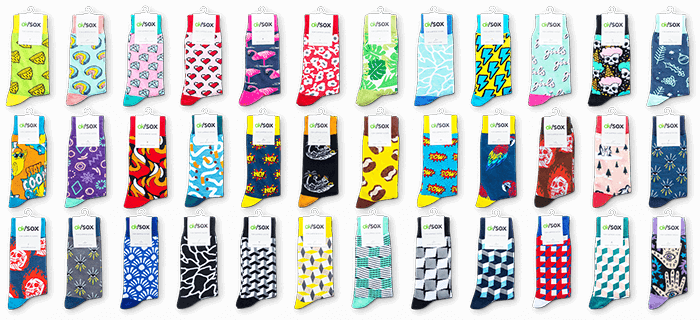
 English
  Arabic
  French
  German
  Spanish
  Italian
  Russian
  Japanese
  Korean
  Hindi
Hindi  Romanian
  Esperanto
  Afrikaans
  Amharic
  Moroccan Arabic
  Azerbaijani
  Estonian
  Czech
Czech  Finnish
  Friulian
  Scottish Gaelic
  Hebrew
  Armenian
  Kazakh
  Nepali
  Vietnamese
  Uzbek
Uzbek  Urdu
Urdu  Ukrainian
  Tamil
Tamil  Swedish
  Slovenian
  Chinese